
Concrete Restoration & Repair
Bringing an existing slab back into service. Joint work, spall and edge repair, resurfacing, moisture mitigation, and waterproofing — the work that has to happen before a finish floor is worth installing.
Joint Fills & Rebuilds
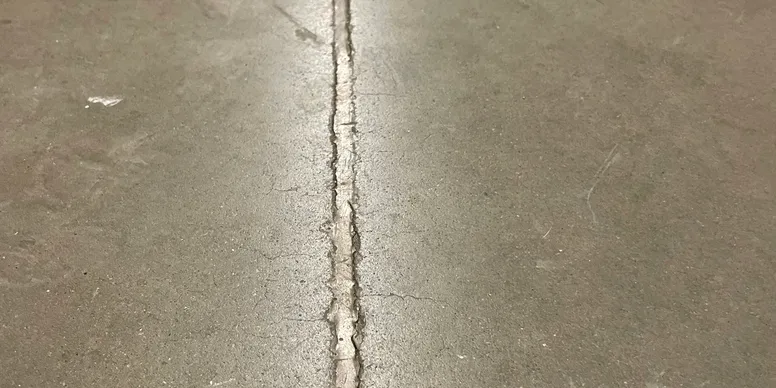
Control joints are cut into a slab on purpose, but in a traffic environment they become the weak point. Hard wheels hit the unsupported joint edge over and over until the concrete chips away, and the joint gets wider, rougher, and faster to deteriorate.
A joint fill puts a semi-rigid filler into a cleaned-out joint so the edges are supported and wheels roll across instead of dropping in. A joint rebuild is what's needed once the edges are already broken down: the damaged concrete is removed and the joint shoulder is rebuilt before it's filled.
This is one of the highest-value repairs in a warehouse. It protects the slab, protects the equipment running over it, and it gets cheaper the earlier you do it.
Spall & Surface Repair
Spalling is concrete breaking away from the surface — usually starting at a joint, an edge, or a point of impact. Left alone it spreads, because every broken edge becomes a new place for damage to start.
Repair means removing the failed concrete back to sound material and rebuilding the area so it's flush and load-bearing again, rather than smearing filler over the top of it.
- Spalled and popped-out areas
- Broken joint and slab edges
- Impact damage
- Worn or dusting surfaces
- Patch work from prior repairs
- Pitting and surface loss
Concrete Resurfacing
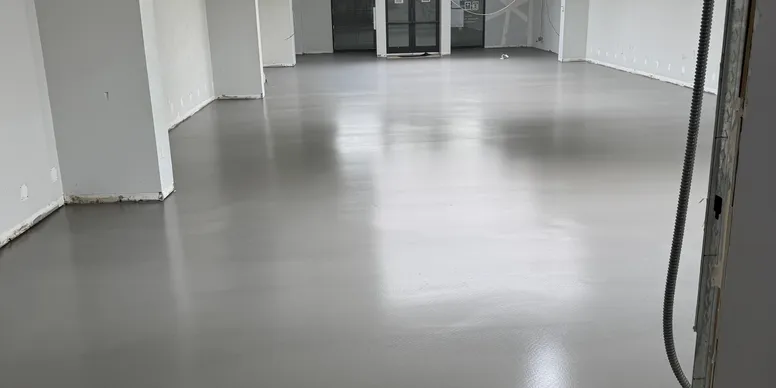
When damage is widespread rather than localized, patching stops making sense. Resurfacing rebuilds the wearing surface of the slab across the area, giving a consistent floor to work from — and a base that a coating or polish can actually be installed over.
Moisture Mitigation & Waterproofing
Moisture moving up through a slab is the quiet cause of a lot of flooring failures — bubbling, delamination, and adhesive breakdown that looks like a product defect but isn't.
Why It Matters
Vapor pressure from below can lift a coating off a slab regardless of how well the surface was prepared.
Moisture Mitigation
A system installed on the slab to control vapor transmission before the flooring goes down.
Waterproofing
Protecting the slab and the space from water intrusion where conditions call for it.
Common Signs
Bubbling or blistering coatings, dark damp patches, efflorescence, or adhesive that won't hold.
Where It Comes Up
Slabs on grade, basements, older buildings, and any space with a history of flooring failure.
Testing First
Whether mitigation is needed is a question about your slab, not a guess — it should be answered before installation.
Restoration Before Finishing
Repair work usually isn't the end goal — it's what makes the finished floor possible. Once a slab is sound, it can be polished, coated, or overlaid. If you want the finished result and the slab needs work first, we handle both phases so you aren't coordinating two contractors around one floor.
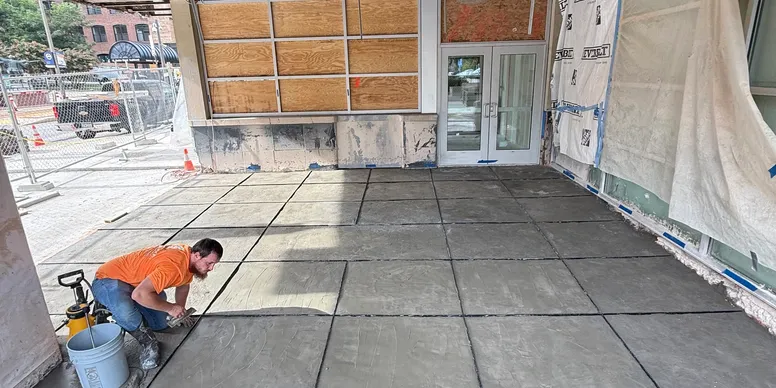
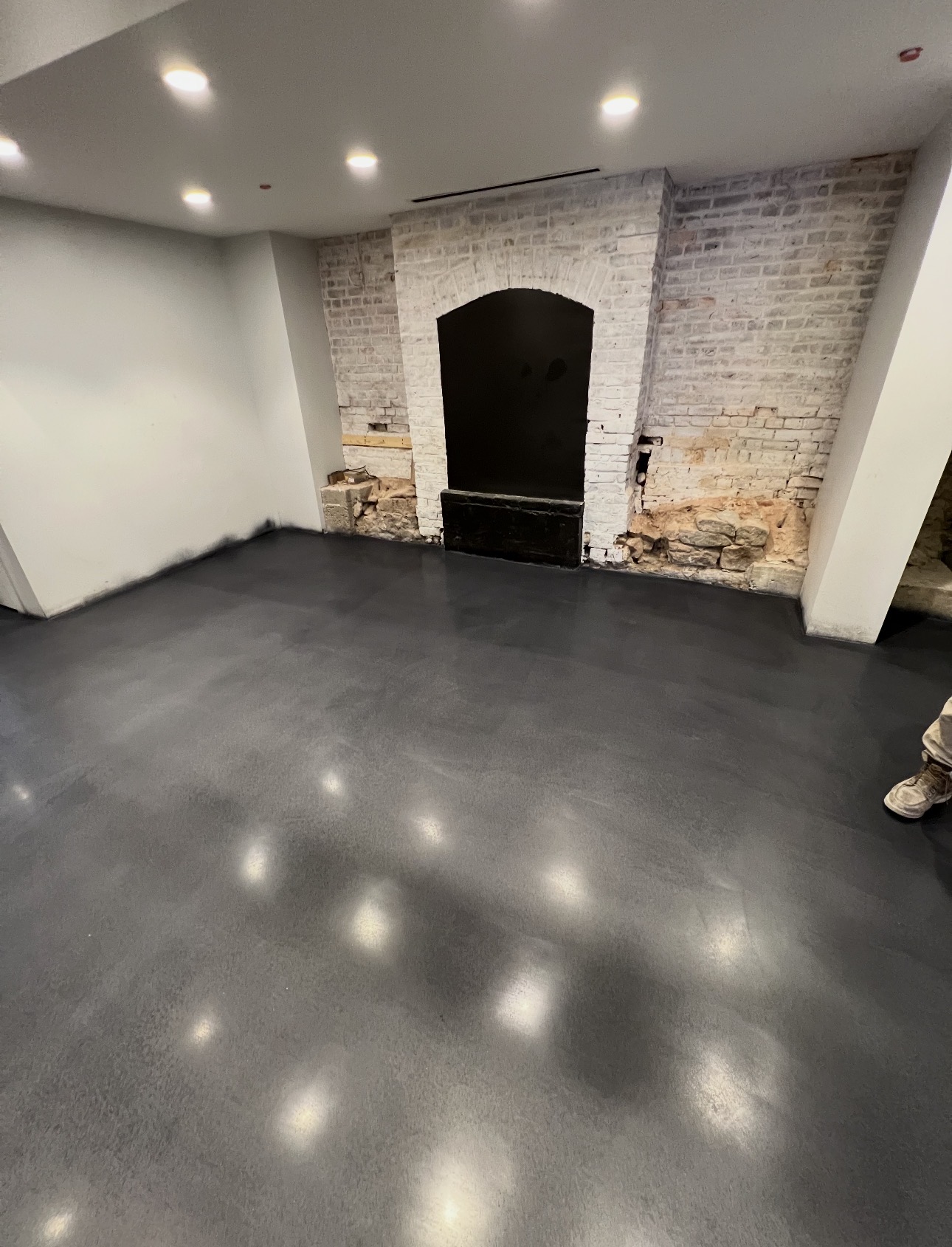
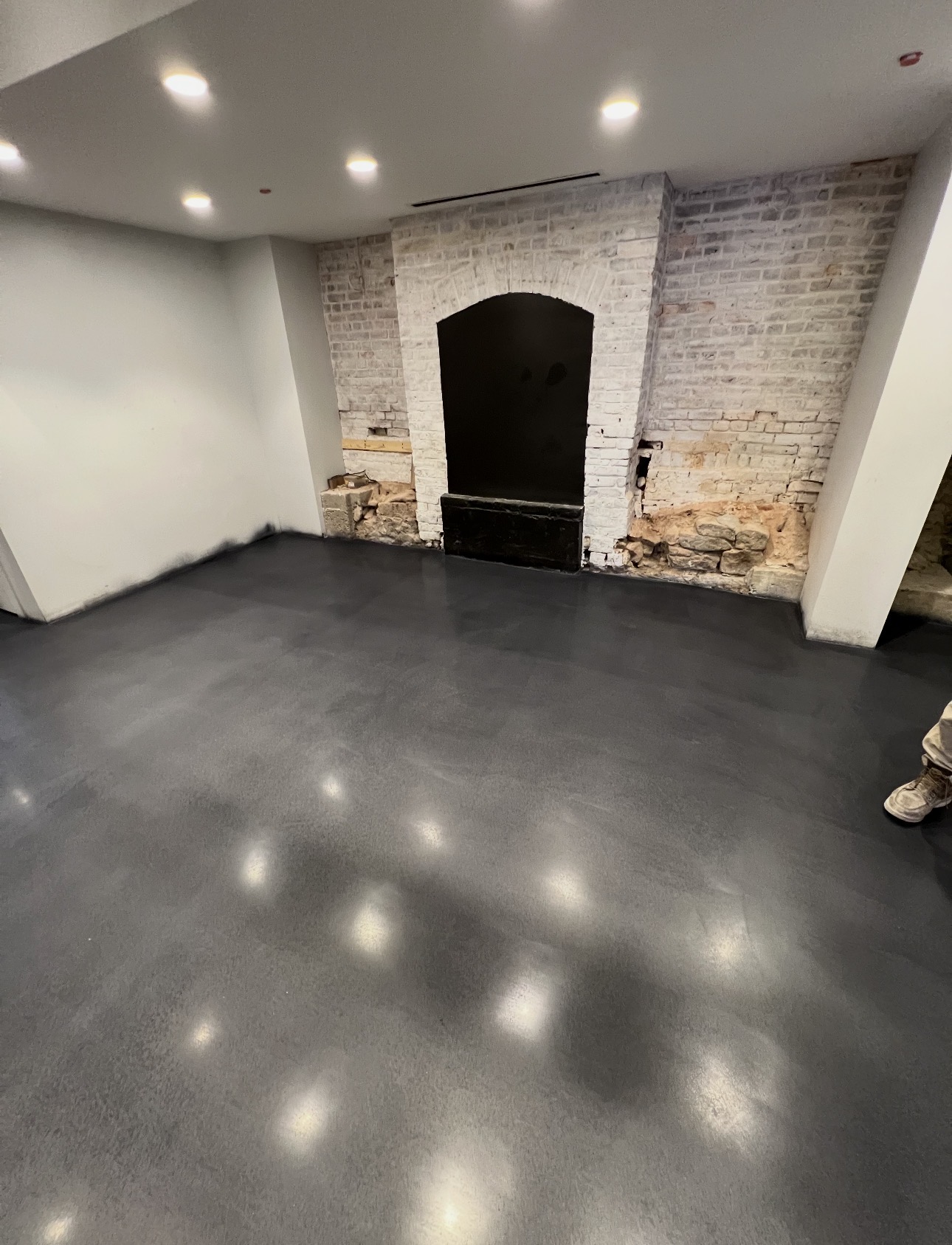
Restoration & Repair Photos
Have a slab that needs work?
Tell us what's failing — joints, spalling, moisture, or general wear — and we'll tell you what it takes to fix it.