
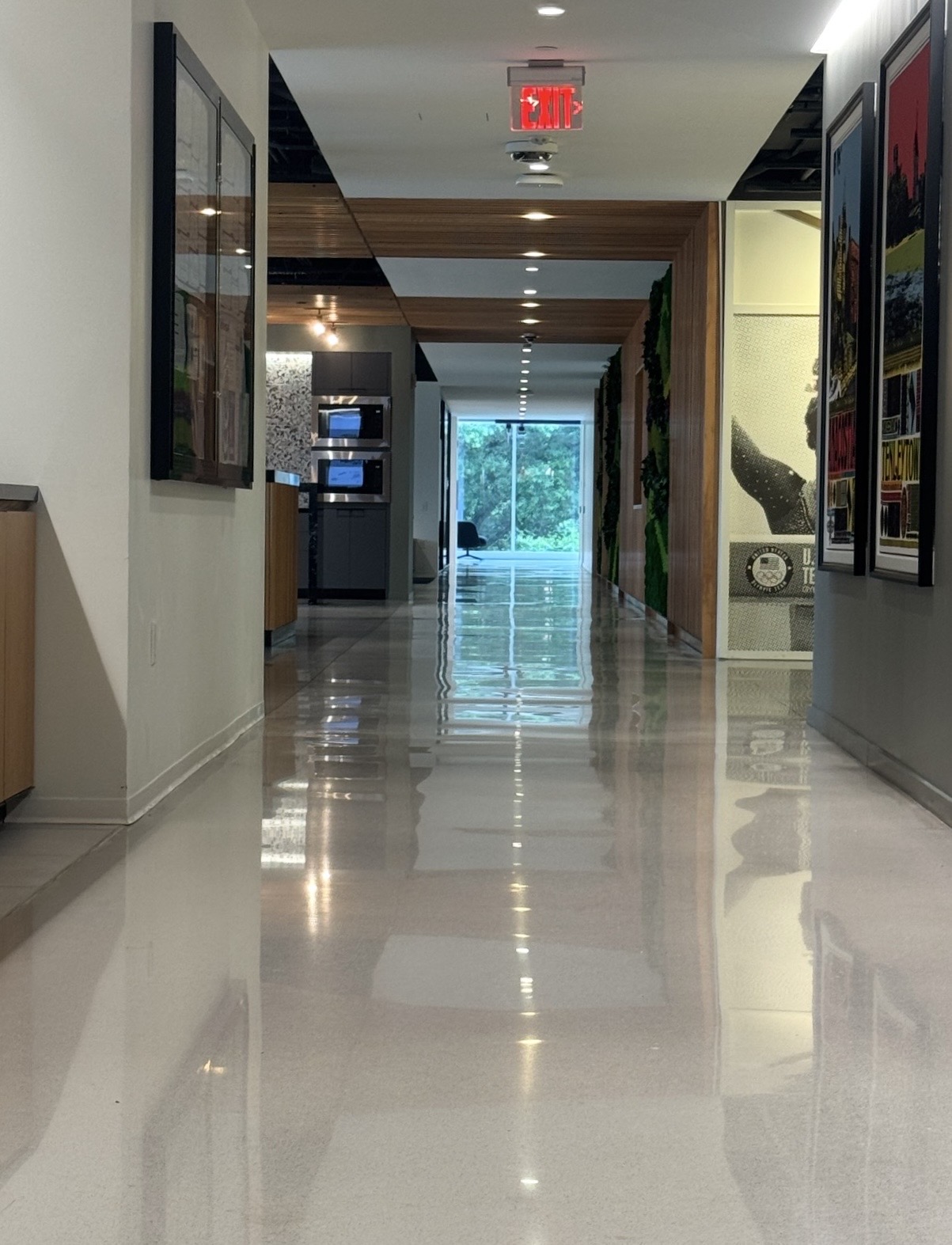
Polished Concrete Flooring
Polished concrete uses the slab you already have. We mechanically process the surface until the concrete itself becomes the finished floor — no covering, no replacement.
What Is Polished Concrete?
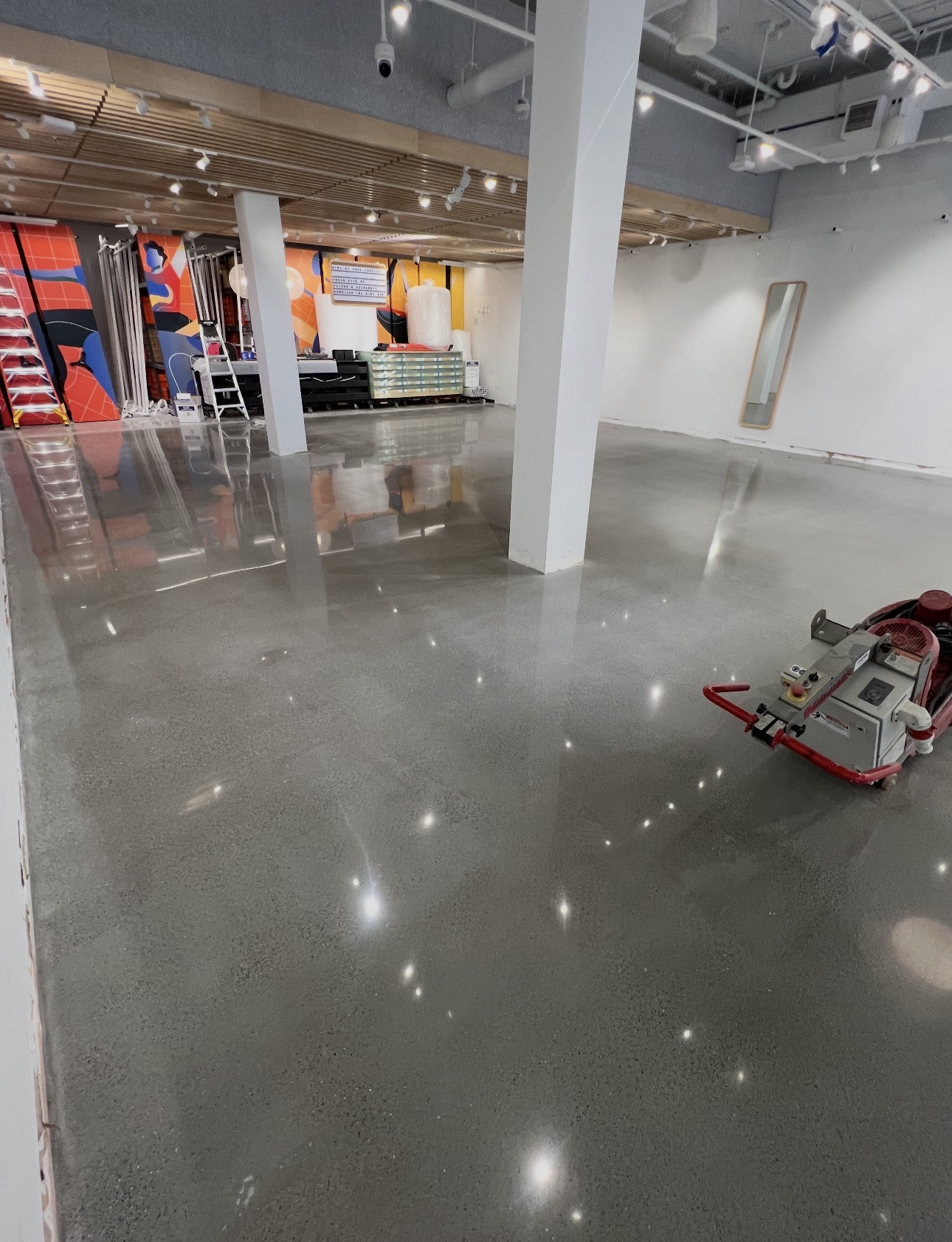
Instead of installing a new material on top of your concrete, polished concrete refines the concrete itself. We run progressively finer diamond tooling across the slab, cutting through the surface and then refining it step by step until it reaches the clarity and sheen you're after.
A densifier is often applied during the process to harden the surface of the slab so it holds up to traffic and takes a better polish. The finished floor is the concrete — sealed or treated, but not covered.
Because we're working with an existing slab, its age, mix, hardness, and condition all affect the result. Two slabs processed the same way will not look identical, which is part of the character of a polished floor.
- Surface preparation
- Diamond grinding
- Densification where applicable
- Progressive honing
- Final polishing
- Sealing where appropriate
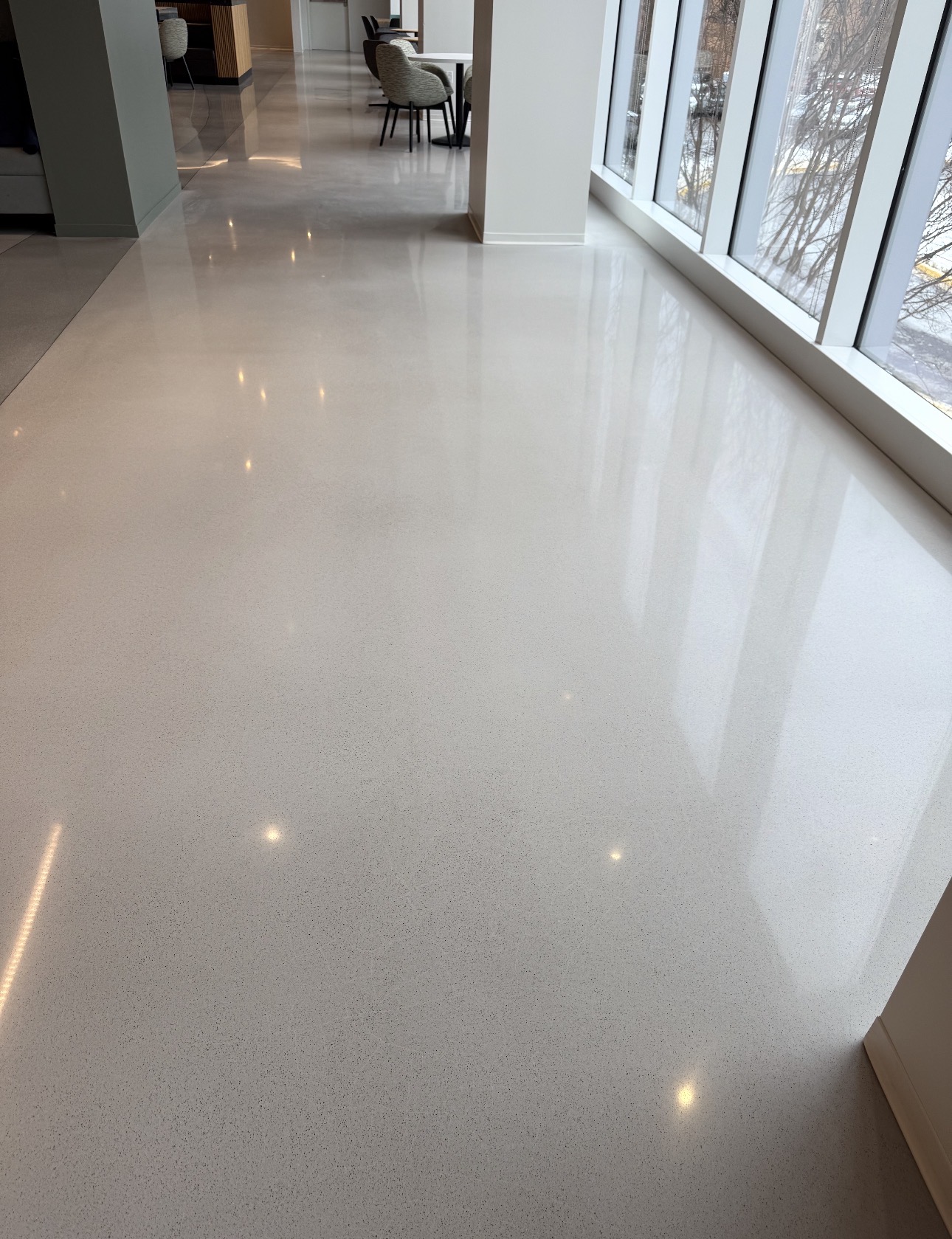
What Polished Concrete Looks Like
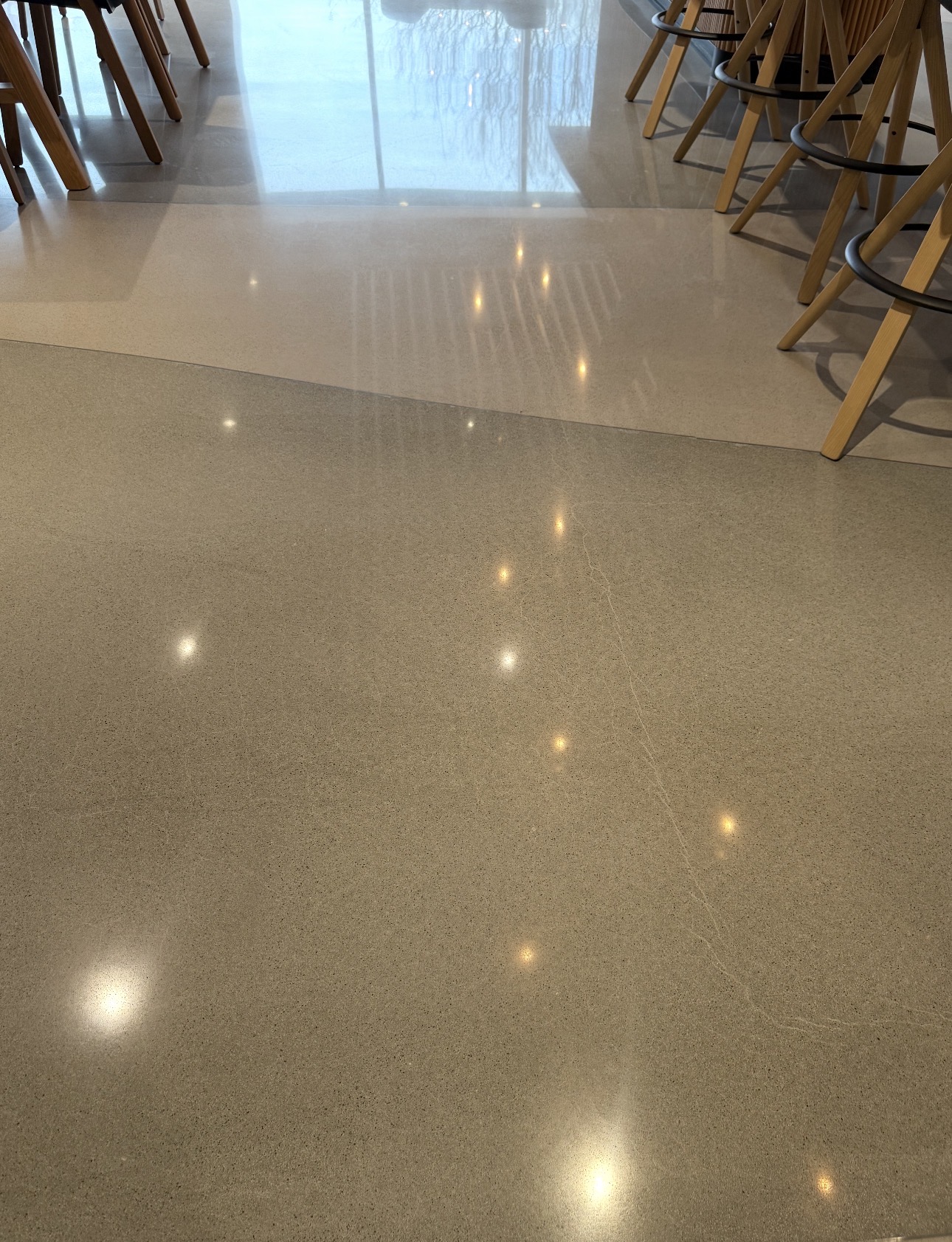
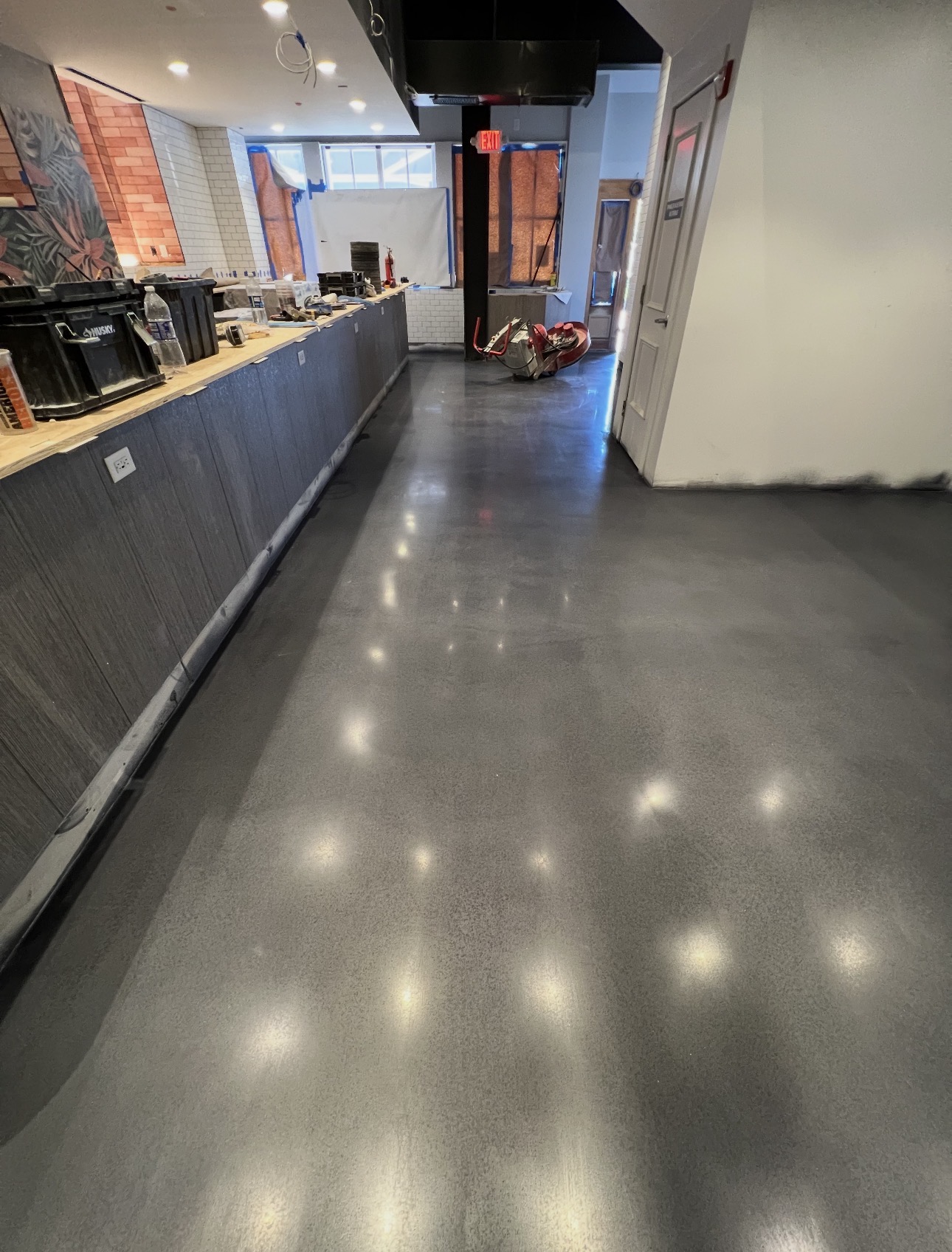
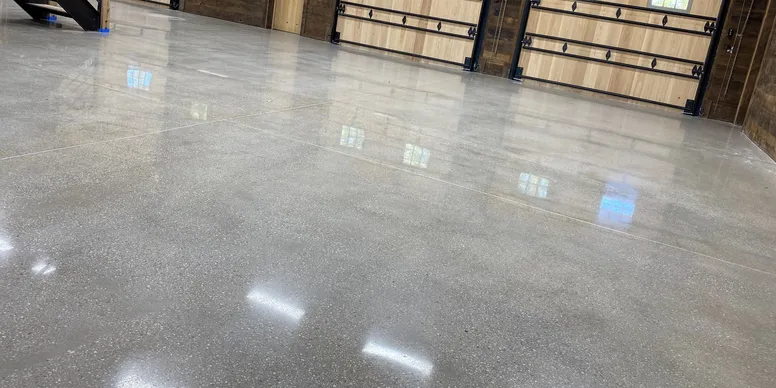
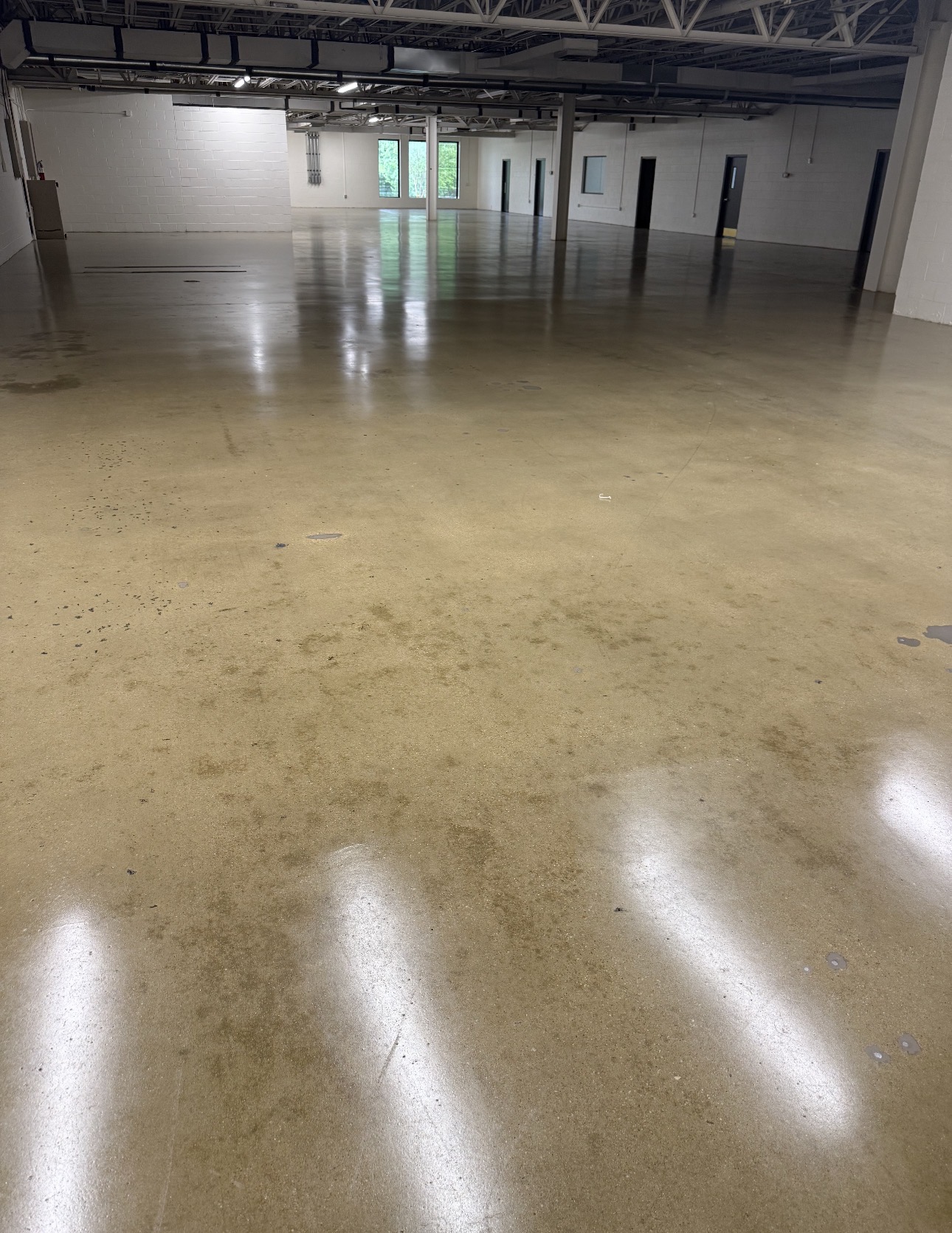
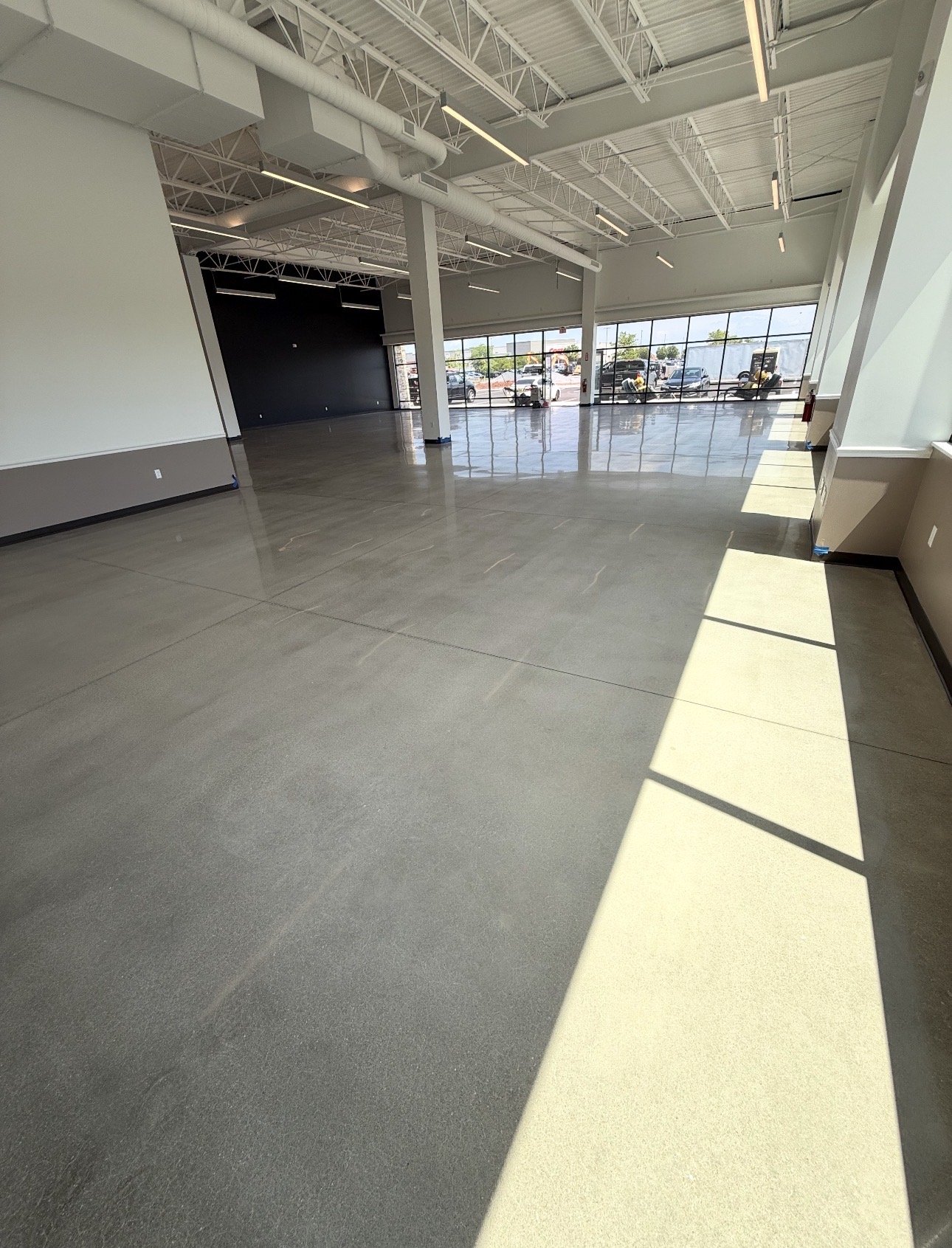
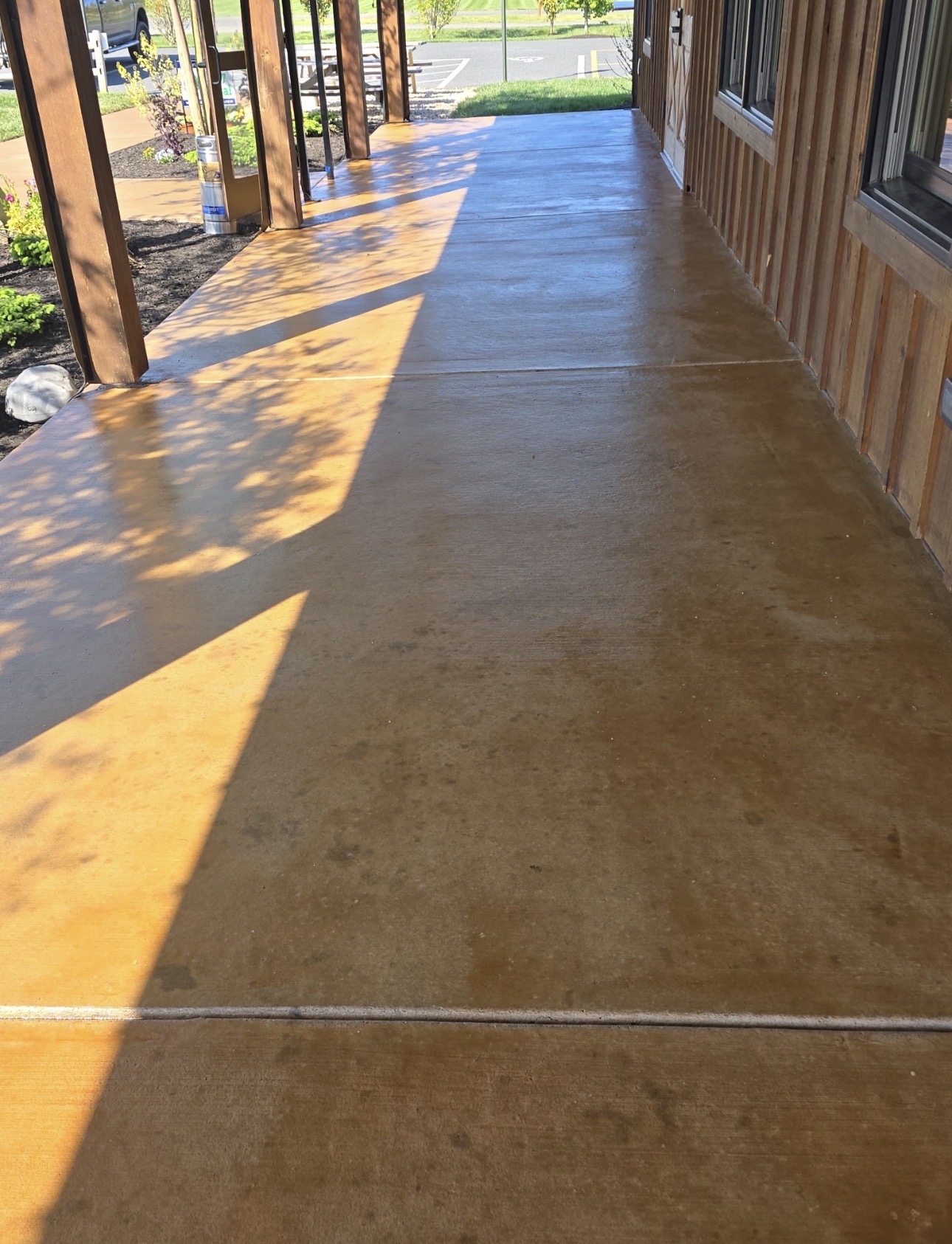
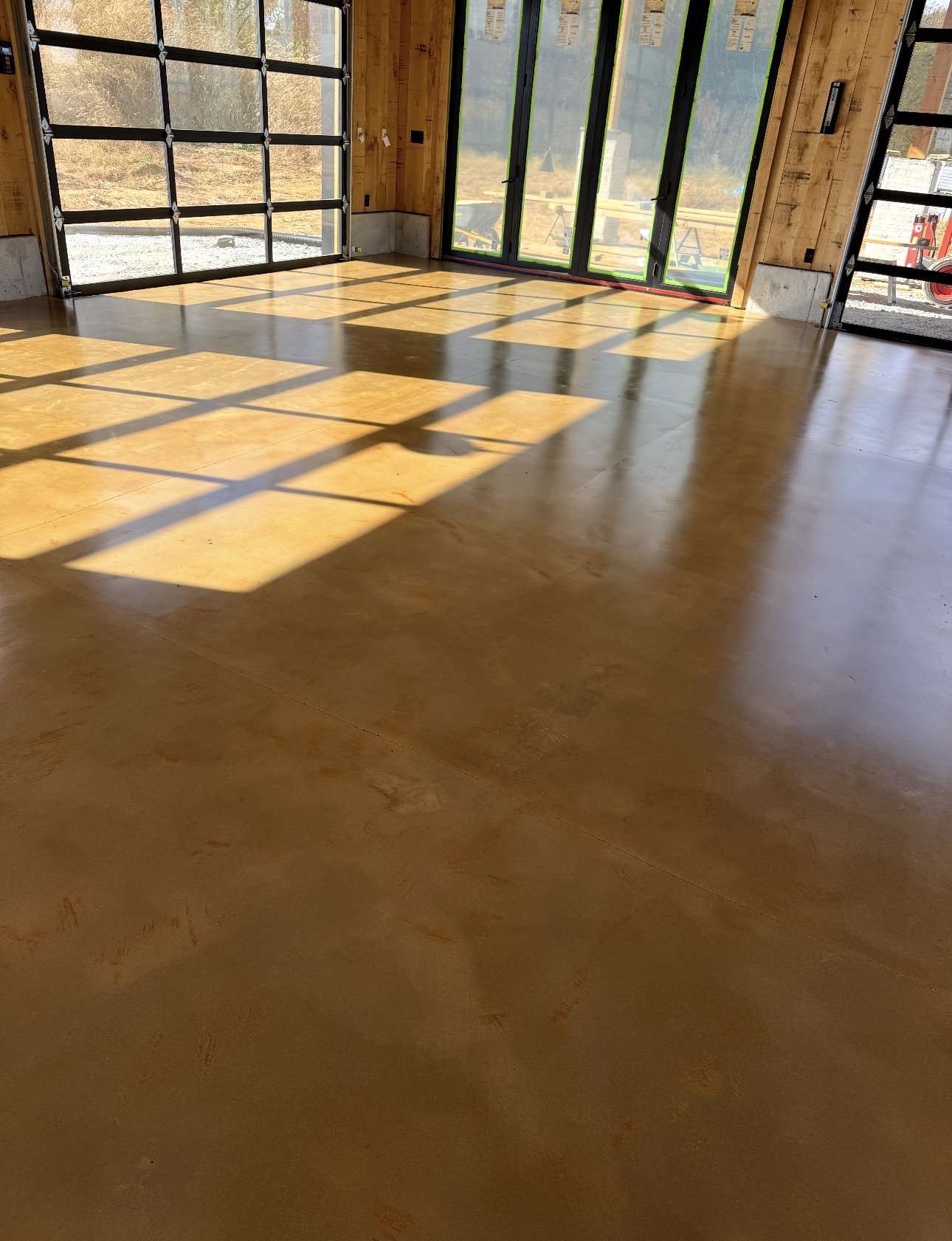
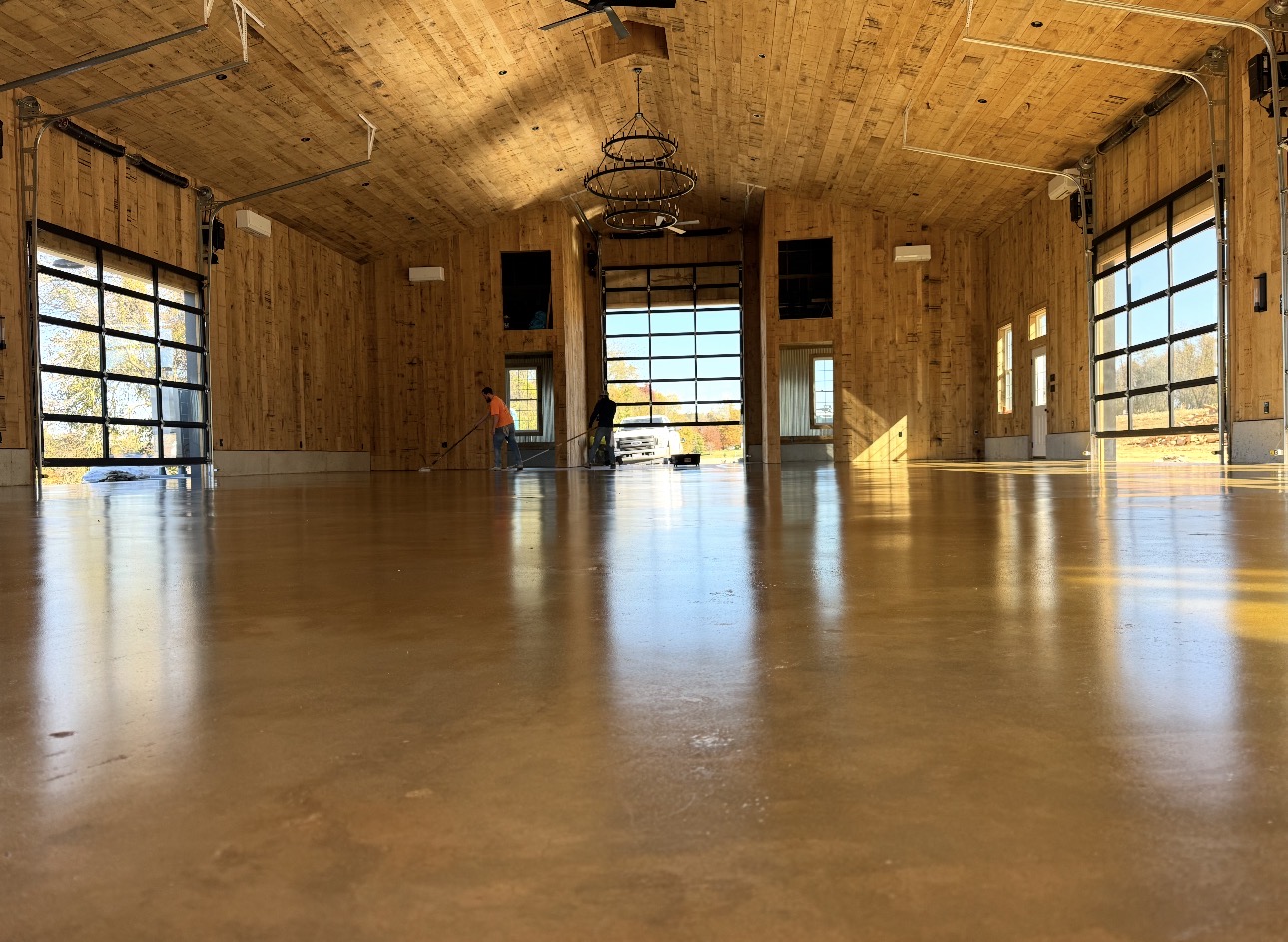
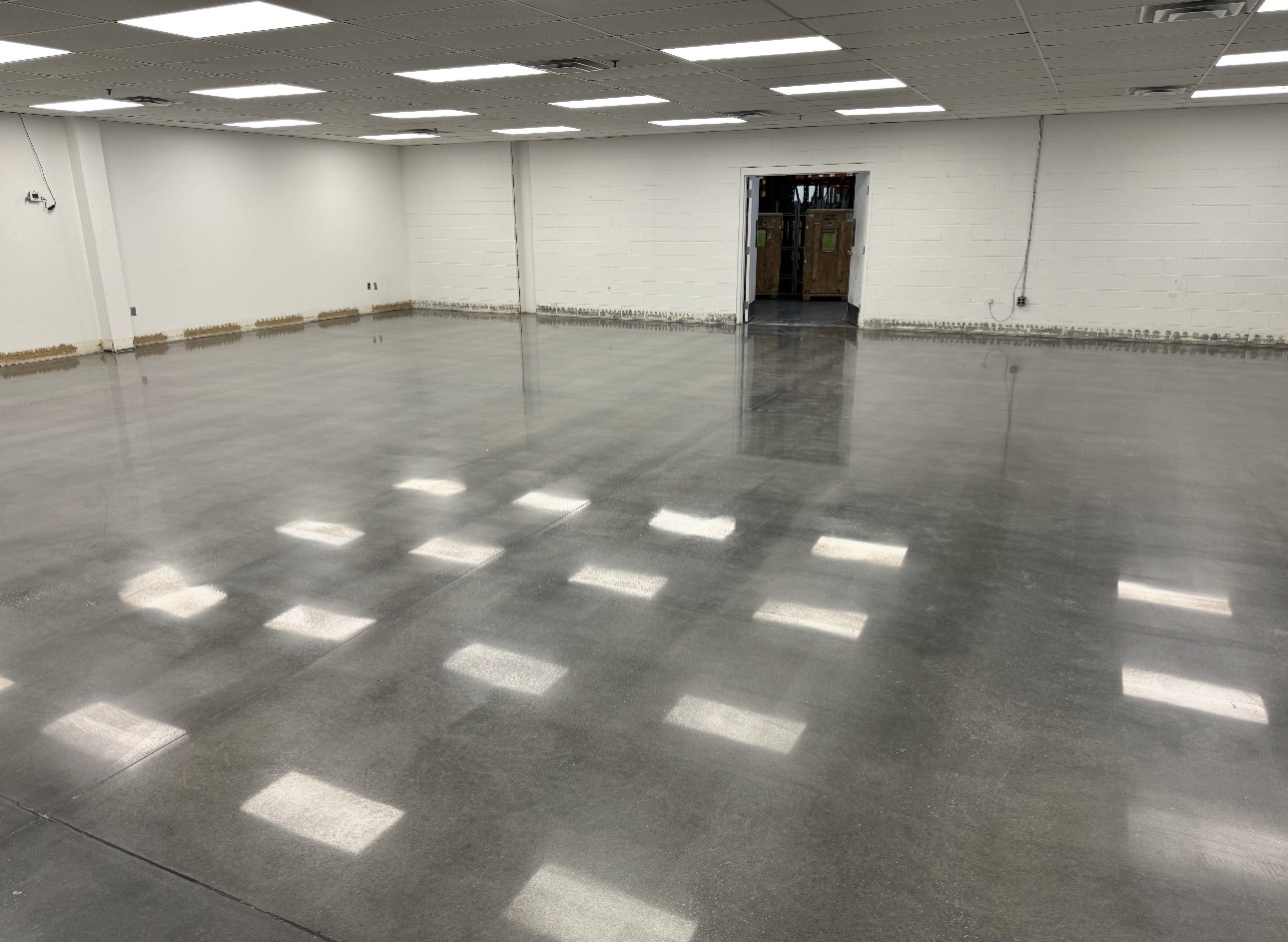
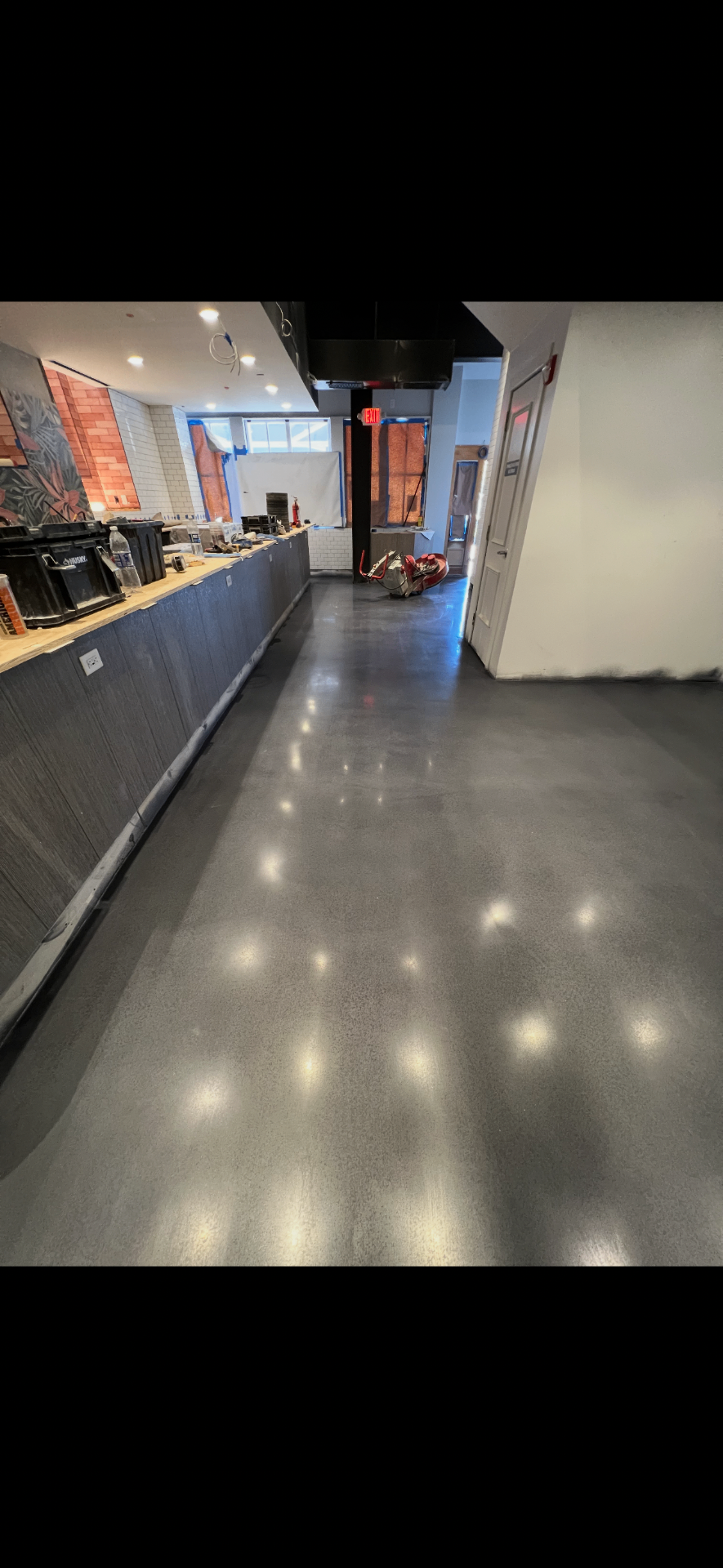
Polished concrete ranges from a soft matte satin to a bright reflective gloss. How much aggregate shows depends on how deeply the surface is cut during grinding.
Why People Choose Polished Concrete
Durable Surface
The wear surface is the slab itself, hardened during processing. There is no coating layer to peel or delaminate.
Easy Maintenance
Most polished floors are maintained with routine dust mopping and damp cleaning rather than stripping and waxing.
Clean Appearance
A smooth, seamless floor with no grout lines, seams, or transitions to collect dirt.
Light Reflectivity
Higher gloss levels bounce light around a space, which can brighten warehouses and open interiors considerably.
Uses What's There
If your slab is a good candidate, you're refining an existing asset instead of buying and installing new flooring material.
Wide Range of Spaces
Works in residential, commercial, and industrial environments, from finished basements to distribution floors.
Where Polished Concrete Works Well
Retail floors and showrooms, warehouses and distribution space, shops and garages, commercial buildings and offices, finished basements, and industrial environments where the slab is sound.
Polish Levels & Finish
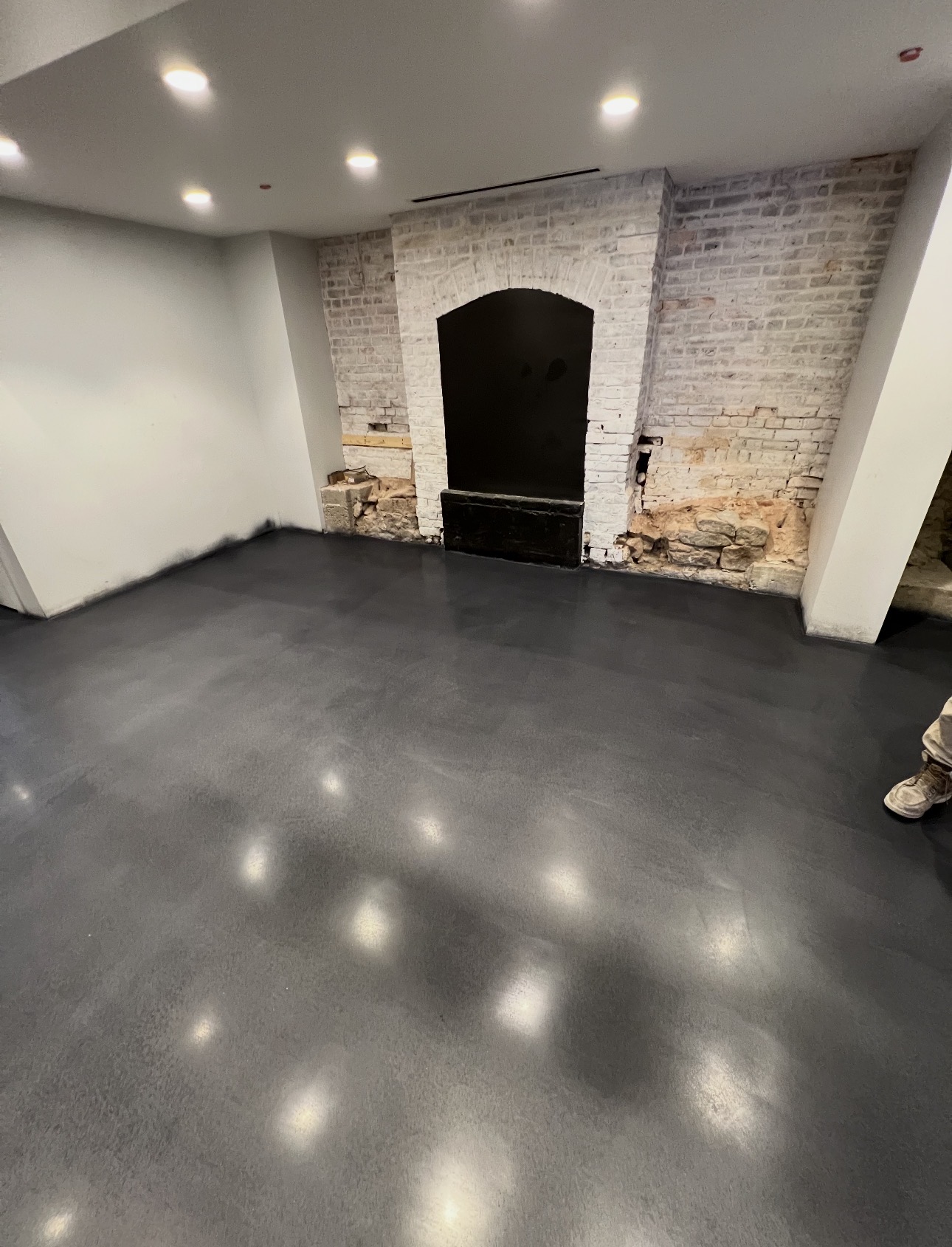
Polished concrete is usually described by two things: how much aggregate is exposed (cream, salt-and-pepper, or larger aggregate) and how reflective the final surface is (matte through high gloss).
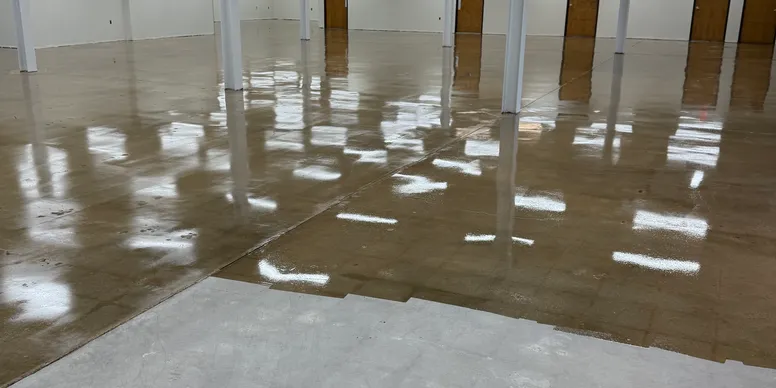
Both are decisions we make together before work starts — but the slab has a vote too. Existing repairs, previous coatings, cracks, color variation, and how flat the floor was originally poured all show through in the finished result. We'll tell you what we expect from your slab rather than promise a specific look we can't control.
Polished vs Sealed Concrete
These get used interchangeably, but they're different jobs.
| Polished Concrete | Sealed Concrete | |
|---|---|---|
| Process | Mechanically ground and refined with progressively finer diamonds | Cleaned and prepped, then a sealer is applied to the surface |
| Finish | Sheen comes from the refined concrete surface itself | Sheen comes from the sealer film or penetrating treatment |
| Appearance | Can expose aggregate and reach a bright reflective clarity | Enhances the existing surface without changing its texture much |
| Typical use | Floors meant to be the finished, long-term surface | Utility and back-of-house areas, or a lower-cost improvement |
Polished Concrete Projects
Request a polished concrete estimate
Send us the details of your slab and space, or call and we'll talk it through.