
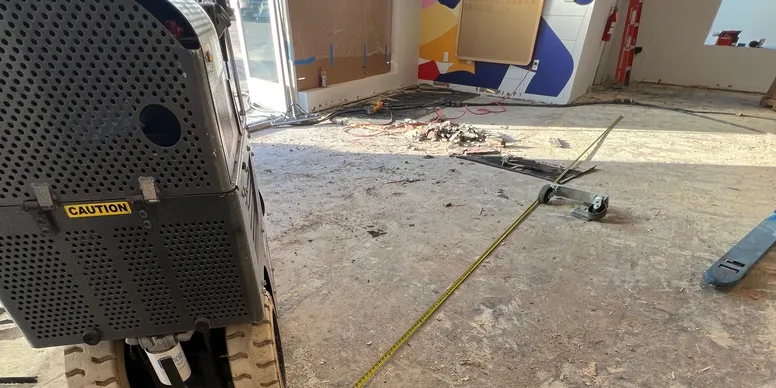
Concrete Surface Preparation
The least visible part of a flooring job and the part that decides whether it lasts. Grinding, shot blasting, scarifying, and coating or adhesive removal to get a slab ready to accept a floor.
Why Surface Preparation Matters
Nearly every flooring failure we get called about traces back to preparation. A coating can only bond to what's underneath it, and concrete straight out of the building is rarely ready: it may be sealed, troweled slick, dusty, contaminated with oil, or still carrying decades of old adhesive and coating.
Preparation opens the surface up mechanically so the new system can grip it, and creates a consistent profile so the finished floor behaves the same way across the whole slab.
Skipping or shortcutting prep is how a floor peels, bubbles, or delaminates a year later. It isn't an optional line item.
Preparation Methods We Use
Which method is right depends on the slab, what's on it, how much material has to come off, and what's going down next.
Diamond Grinding
Diamond tooling cuts the surface of the concrete. Used to flatten, open the surface, remove thin coatings, and produce a controlled profile.
Shot Blasting
Steel shot is thrown at the slab and recovered, texturing the surface across large areas quickly. Common on warehouse and industrial floors before coating.
Scarifying
An aggressive method that cuts deeper into the surface. Used when there's significant material to remove or a heavily damaged surface to take down.
Adhesive Removal
Removing glue left behind by carpet, VCT, tile, or wood so the slab is clean enough to accept a new system.
Mastic Removal
Old black mastic and cutback adhesive are stubborn and smear under the wrong tooling. They need equipment chosen for the job.
Surface Profiling
Producing the specific texture and roughness the incoming flooring system requires — not just 'rough', but the right profile.
When Preparation Is Needed
The most common trigger is a tear-out: carpet, tile, or VCT comes up and what's left behind is a slab covered in adhesive that no new floor will bond to.
Preparation is also the first phase of most of our other work. If you're considering polished concrete or an epoxy system, prep is already part of that scope — it doesn't have to be ordered separately.
- Old flooring was just removed
- Adhesive or mastic residue remains
- An existing coating is failing or peeling
- The slab is uneven or has high spots
- The surface is sealed, slick, or troweled hard
- Oil, grease, or contamination is present
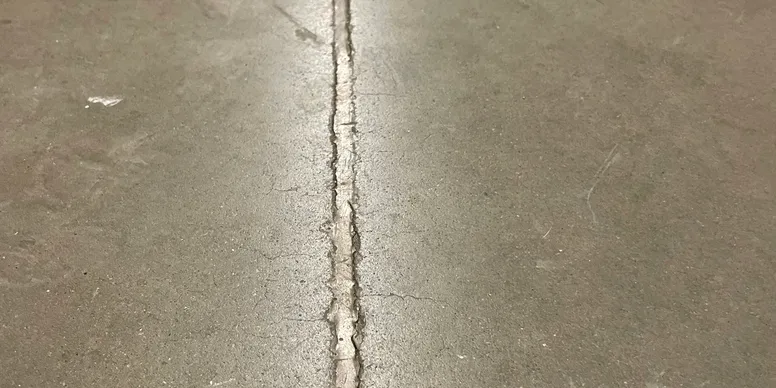
Prep as a Standalone Service
We also take on preparation on its own — for general contractors, facility managers, and other flooring contractors who need a slab brought to a specified condition before their own installation. If you have a profile requirement or a spec to hit, tell us what it is and we'll tell you how we'd get there.
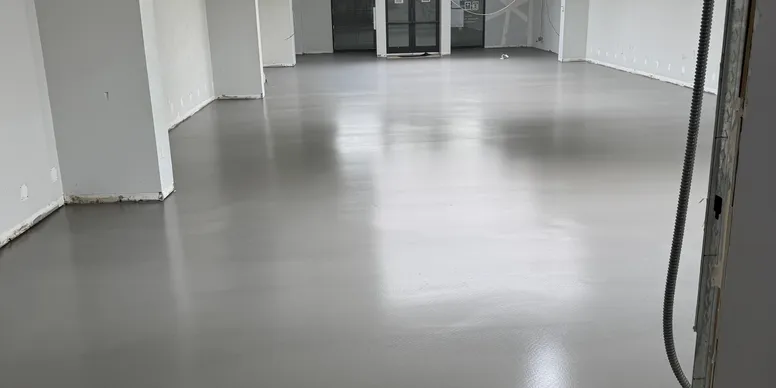
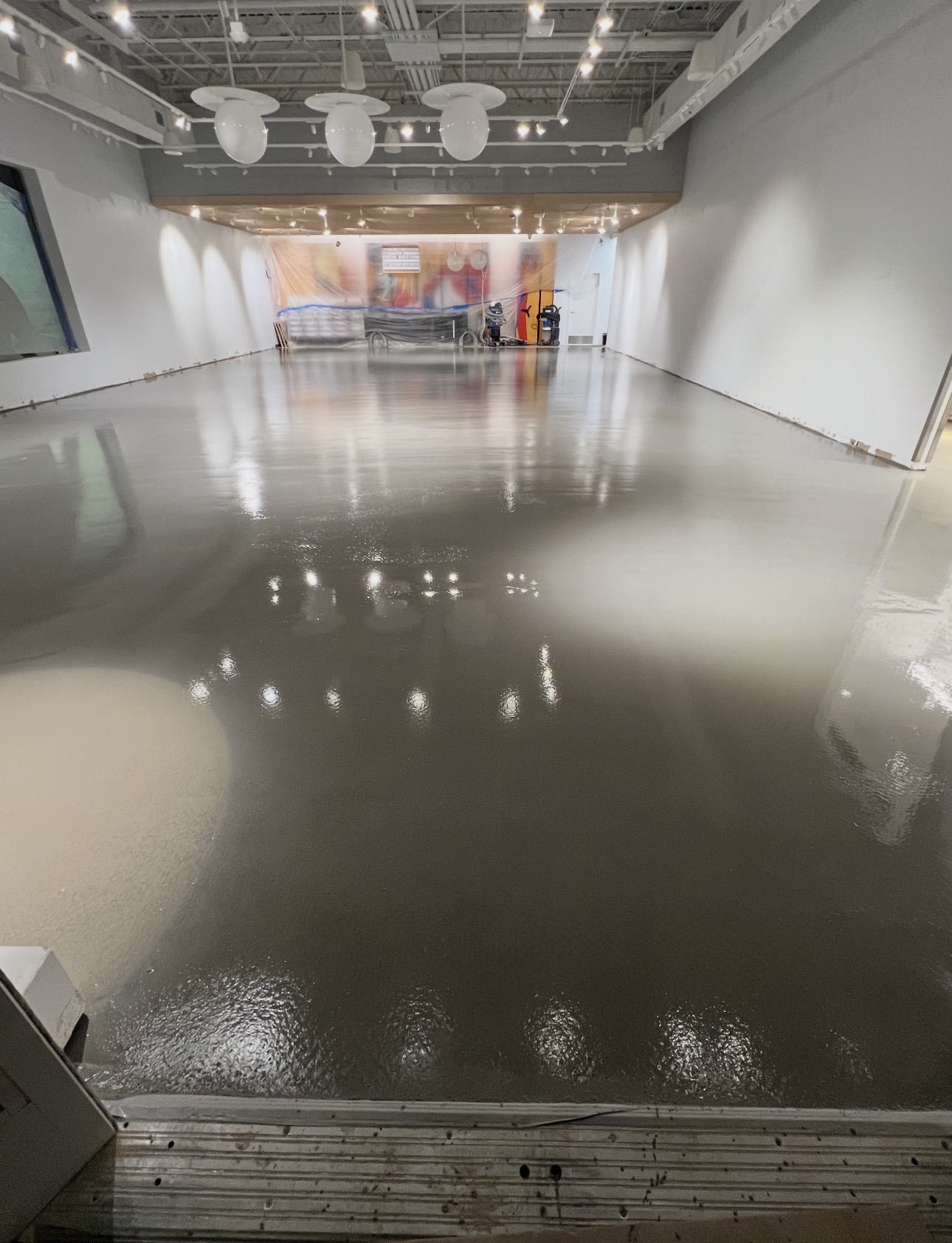
Surface Preparation Photos
Need a slab prepped?
Tell us the square footage, what's currently on the floor, and what's going down next.