
Decorative Concrete Staining, Dyes & Stenciling
Color and design worked directly into the concrete floor — stains, dyes, stencils, logos, and borders that make a floor specific to the space it's in.
Stained Concrete
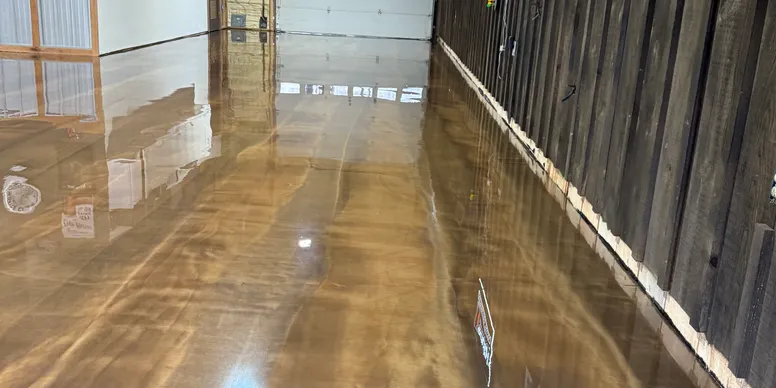
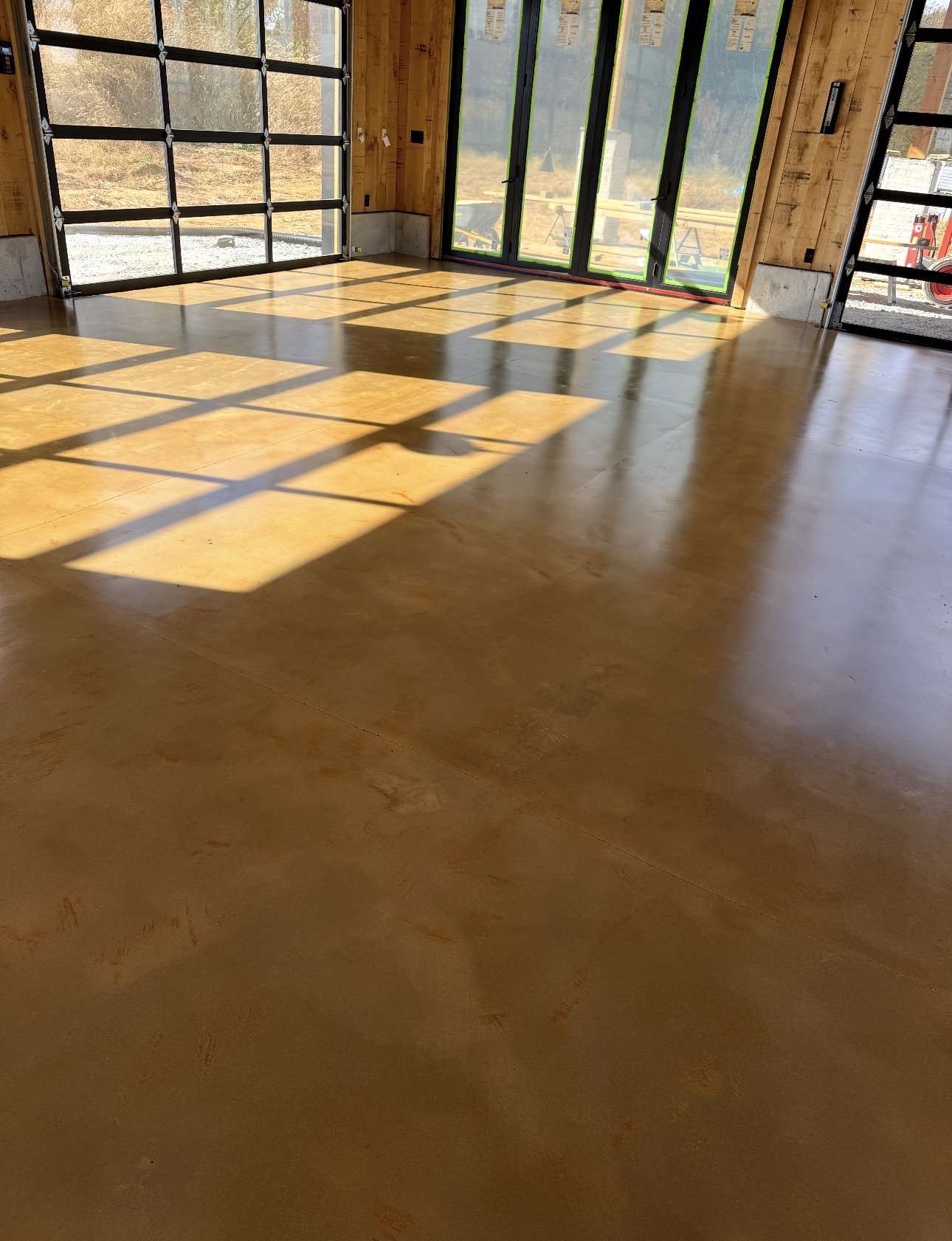
Acid staining reacts chemically with the concrete. The color it produces is variegated and mottled rather than flat, and it varies with the slab because the reaction depends on what's in the concrete. That variation is the point — it reads more like natural stone than like paint.
Water-based staining is a different approach with a wider, more predictable color range. It's a good fit when you want a specific color rather than a reactive, organic look.
Stain color lives in the surface of the concrete rather than sitting on top of it, so it doesn't chip off the way a painted floor does.
Concrete Dyes
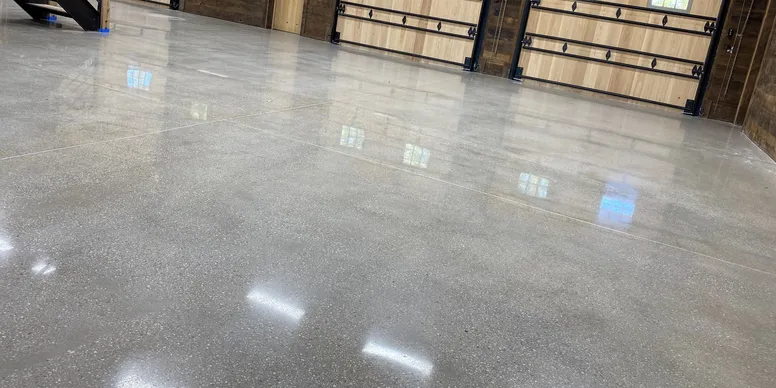
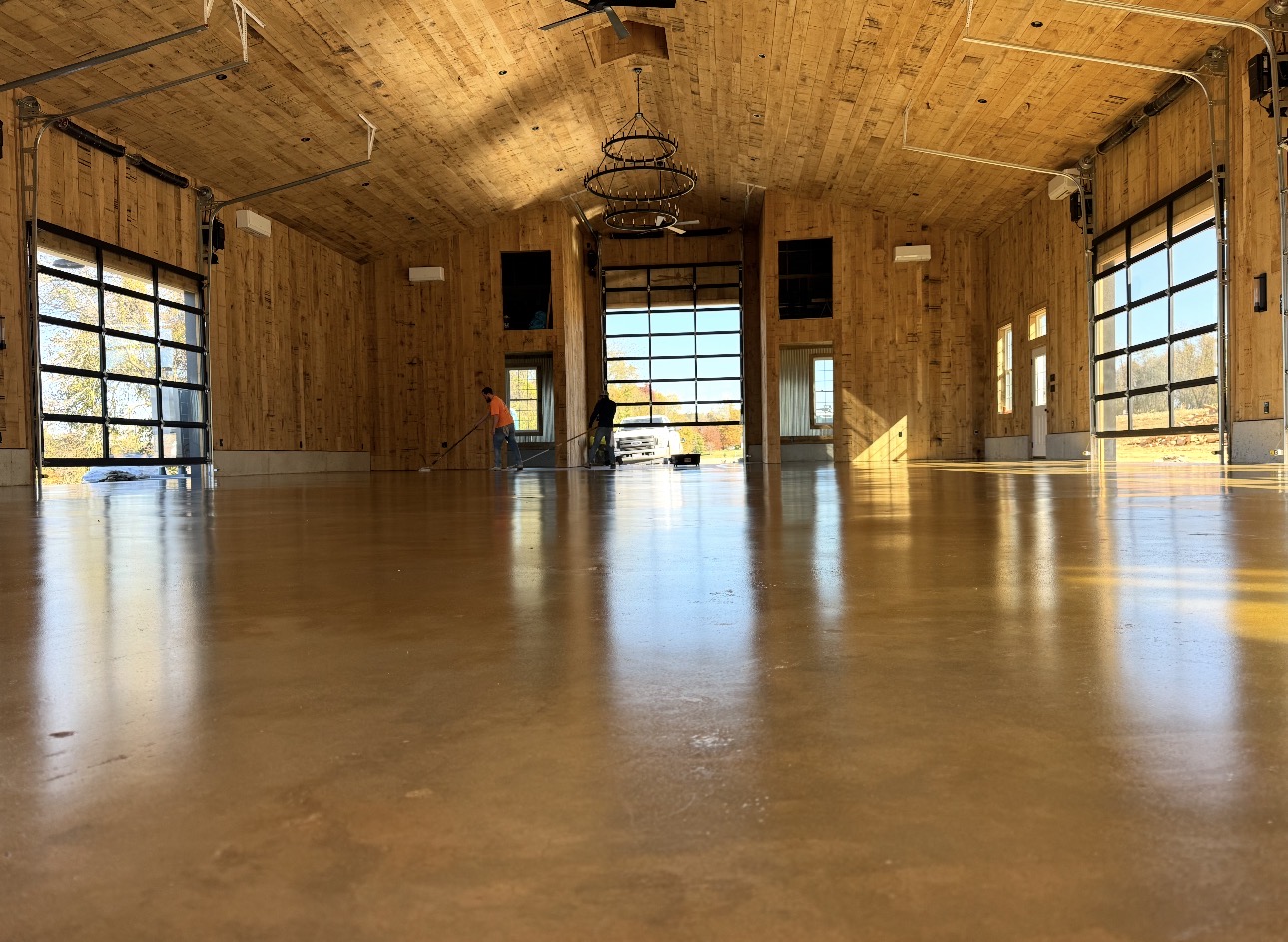
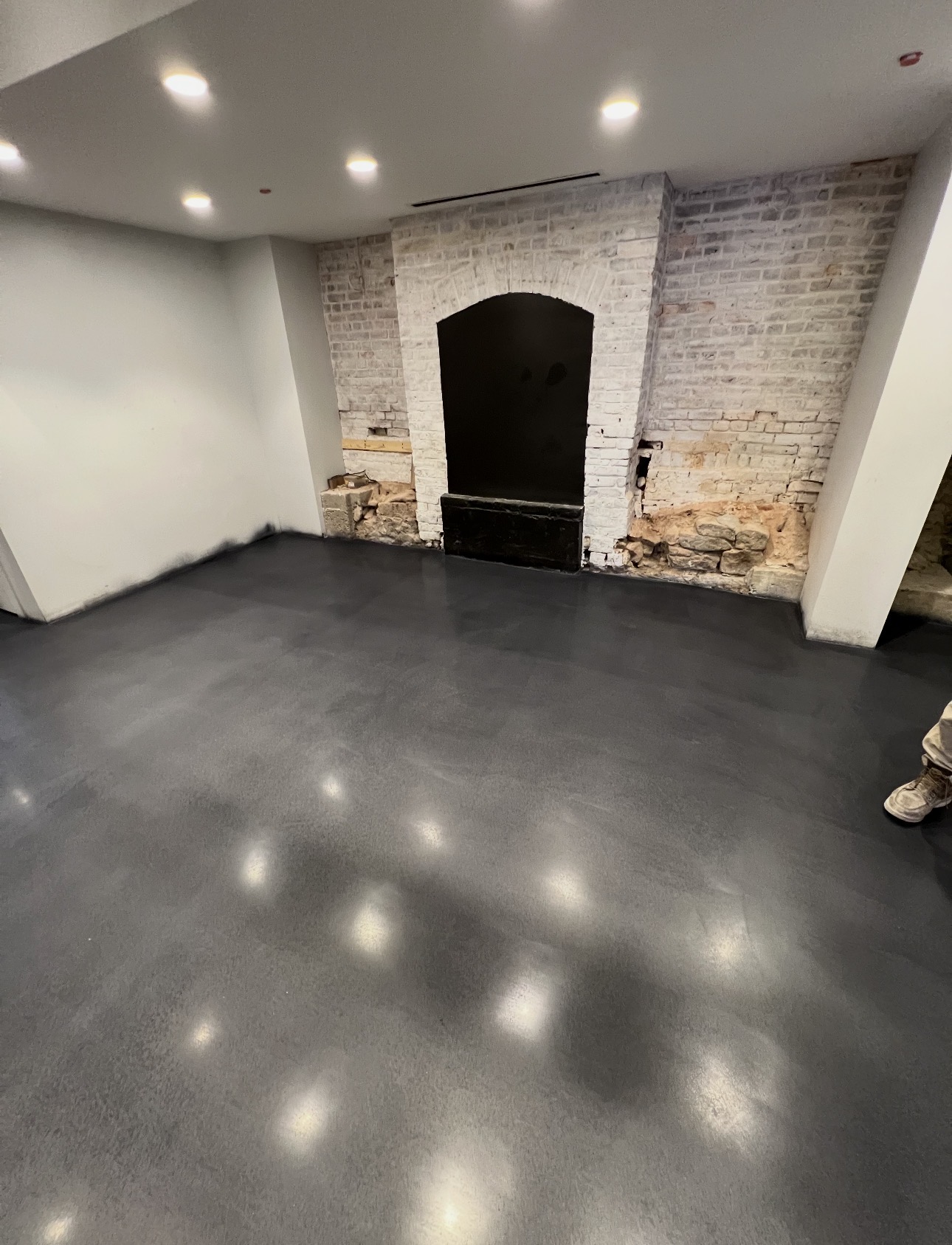
Dyes penetrate the concrete and give a more uniform, more saturated result than a reactive stain. They're commonly used on interior polished floors where a specific tone is wanted — grays, charcoals, browns, or stronger accent colors.
Dyes are typically an interior product and are usually paired with polished concrete so the color is locked into a refined, protected surface.
Custom Stencils & Logos
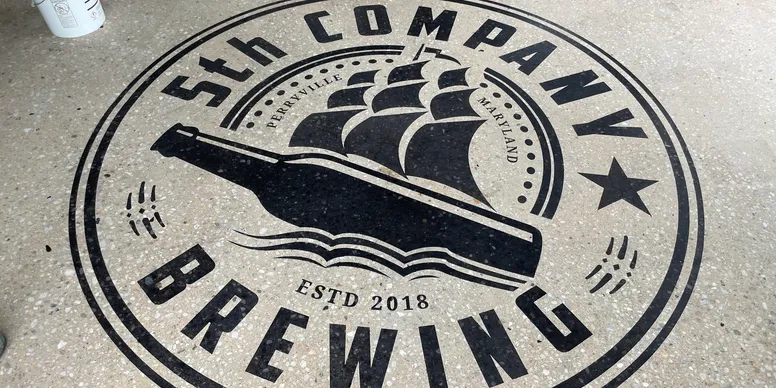
A company logo at the entrance, lettering in a lobby, a border defining a space, or a graphic in a taproom or showroom — stenciled directly into the floor rather than applied as a decal.
Decorative Commercial Floors
Taprooms & Restaurants
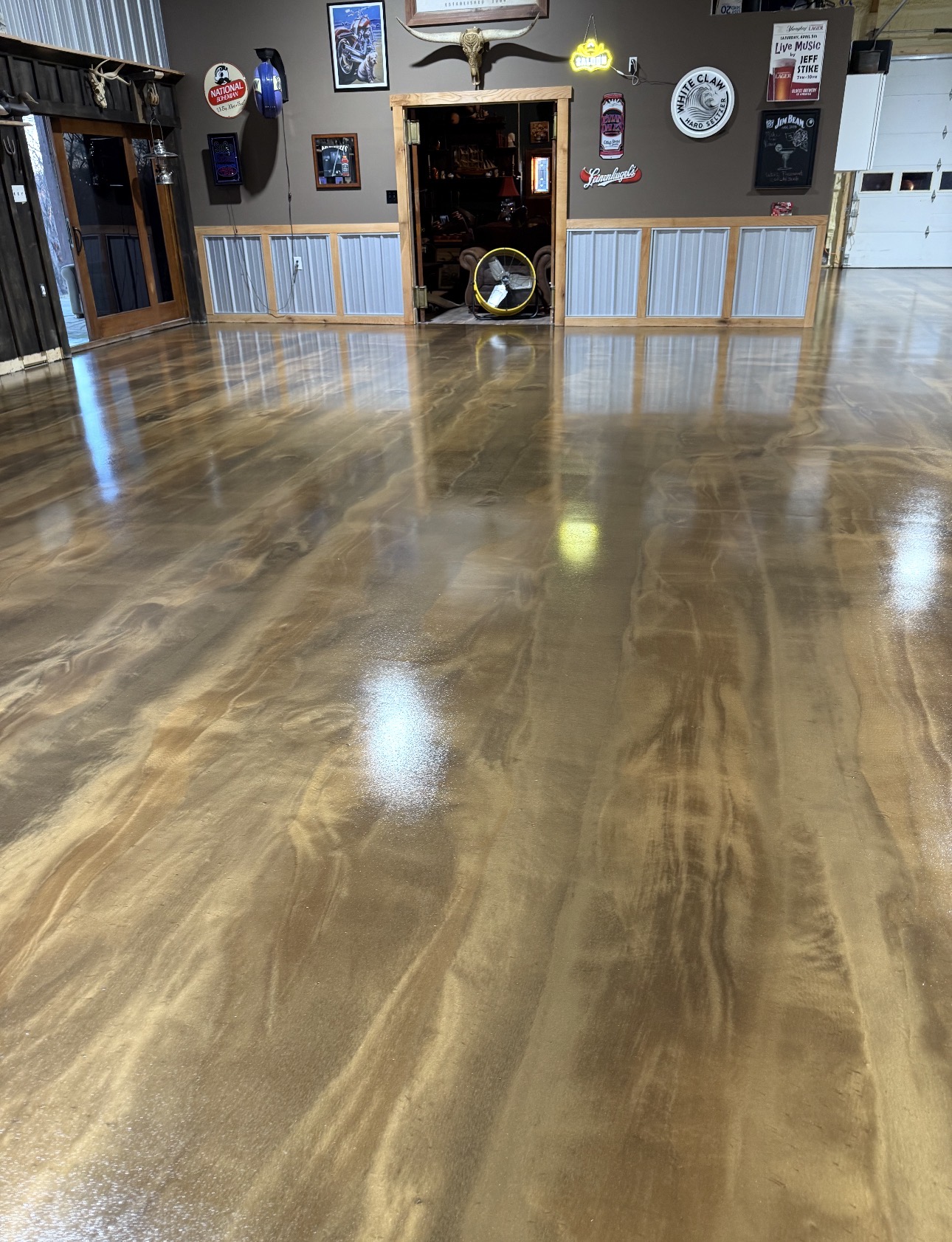
Floors that carry branding and set the tone of the room while still being easy to clean.
Retail & Showrooms
Color and pattern used to define zones, walkways, and display areas.
Offices & Lobbies
A finished, intentional floor at the point where visitors form a first impression.
Residential Interiors
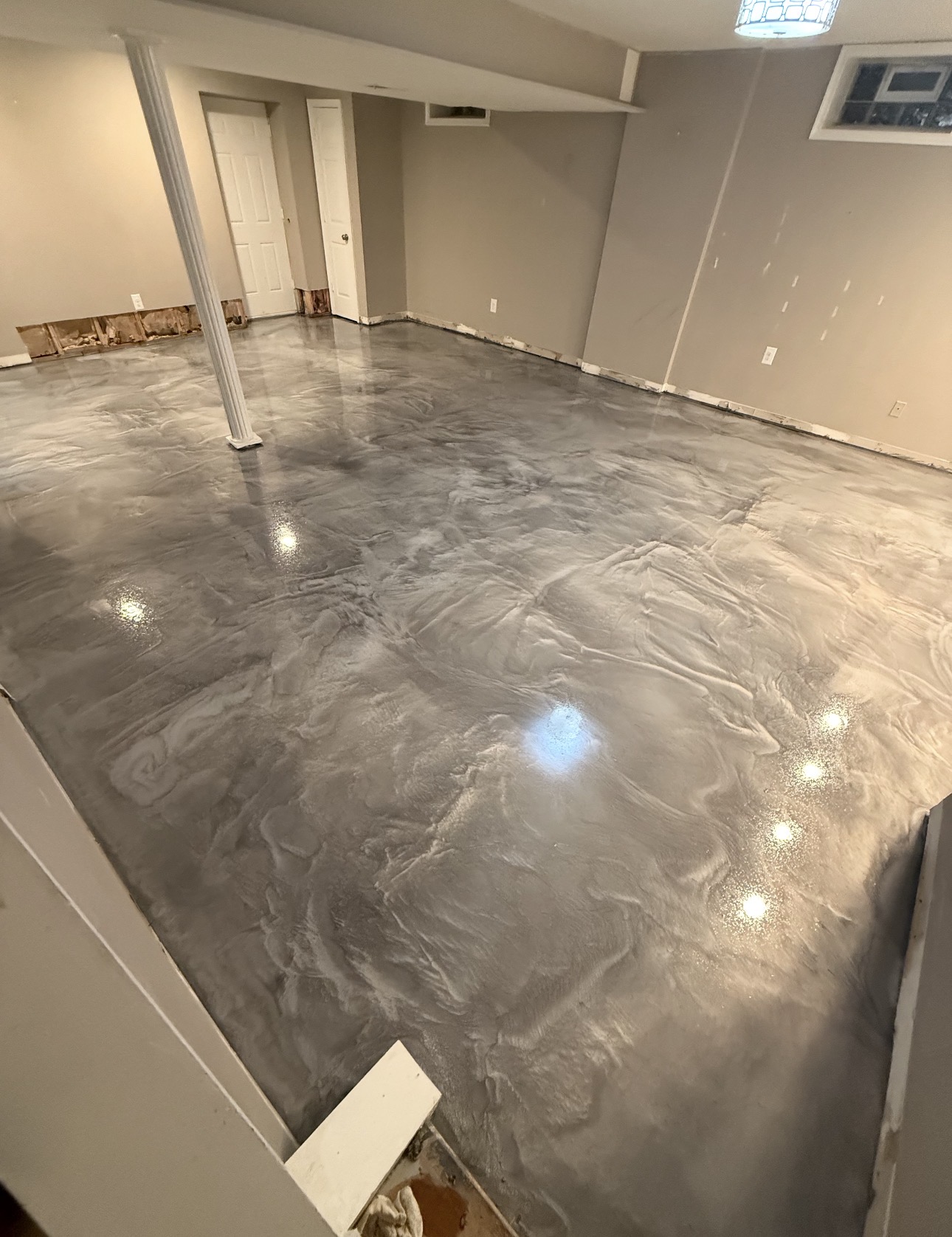
Basements, sunrooms, and living space where a colored concrete floor replaces covering it up.
Patios & Outdoor Slabs
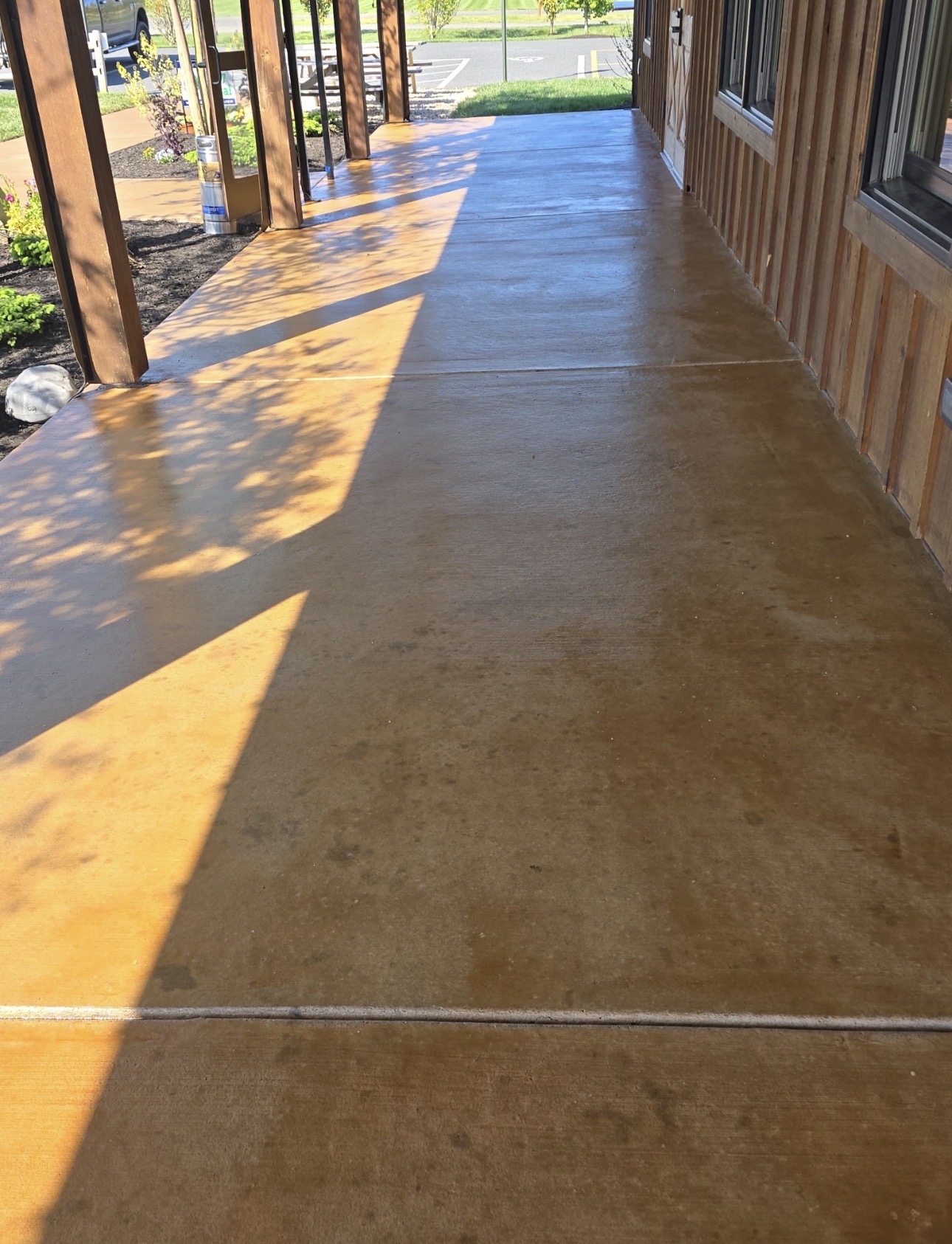
Staining used to warm up plain gray exterior concrete.
Entryways
Logos, lettering, and borders placed where they get seen.
Color & Design Considerations
Decorative work on concrete is not paint on drywall. The slab itself is part of the finished color. Age, mix, previous patches and repairs, old adhesive residue, curing compounds, cracks, and moisture all influence how a stain or dye takes and how even the result looks. Exterior slabs add sun exposure to the list.
We'd rather set expectations honestly up front than promise an exact color match on a slab we haven't tested. When appearance is critical, we'll talk through what your specific floor is likely to do.
Decorative Concrete Projects
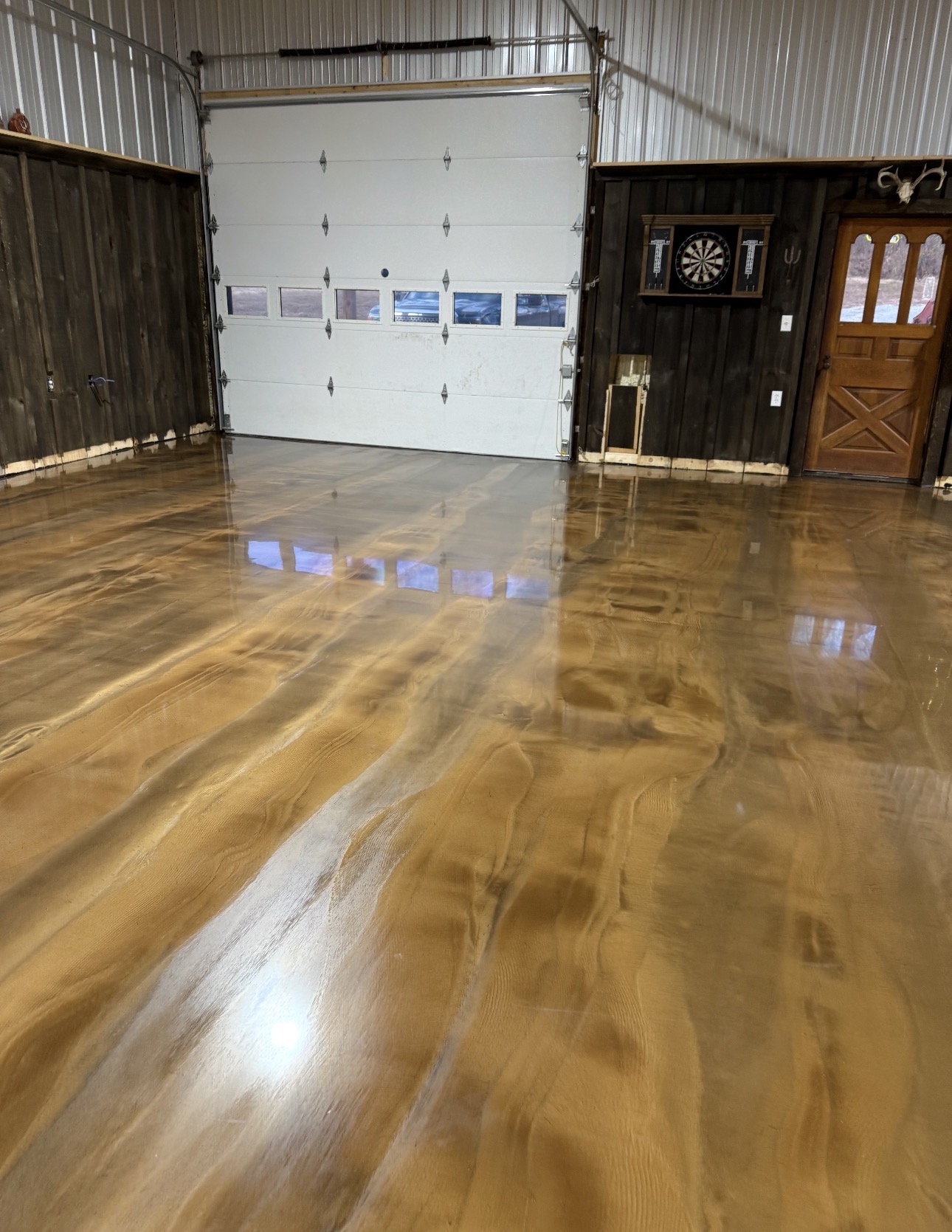
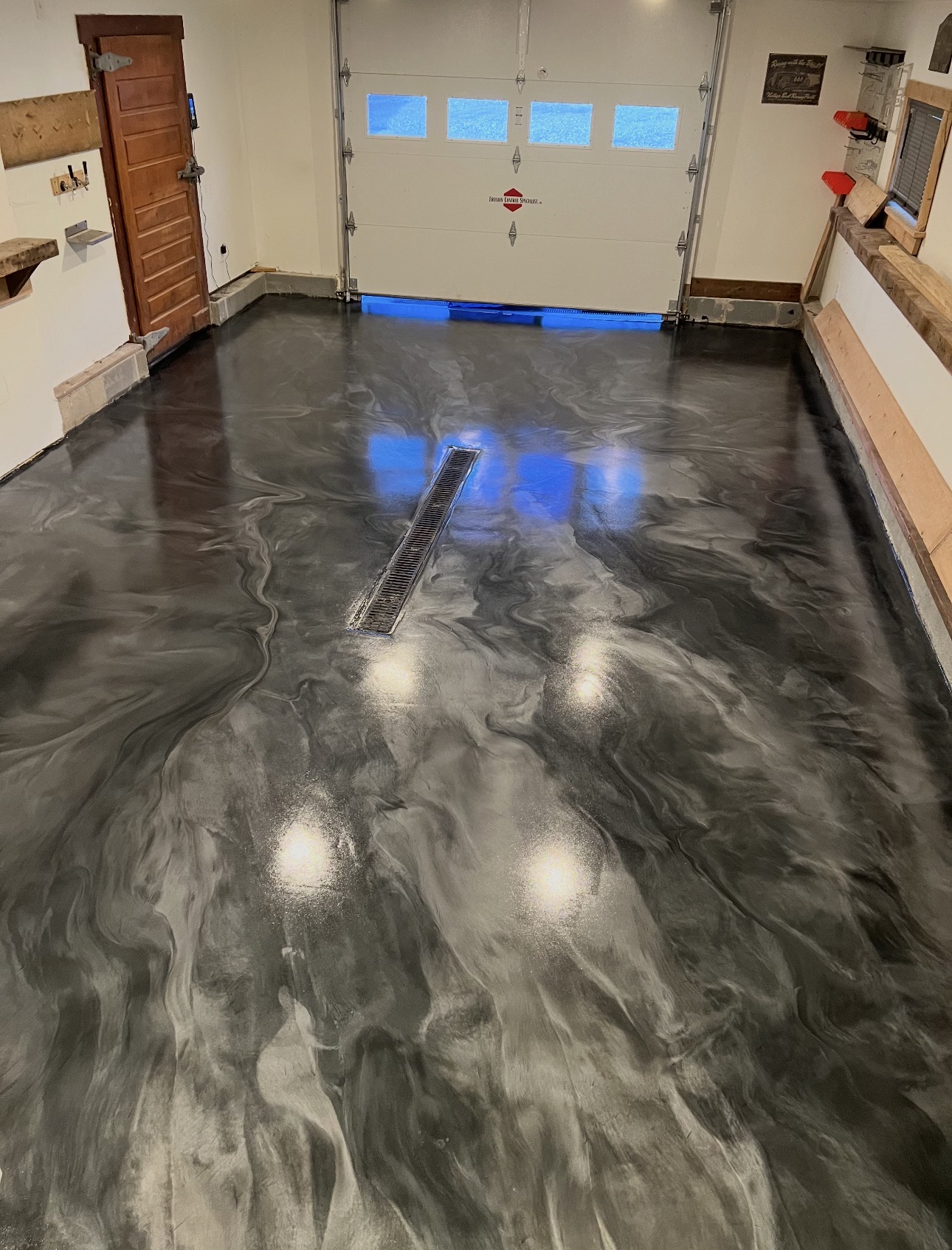
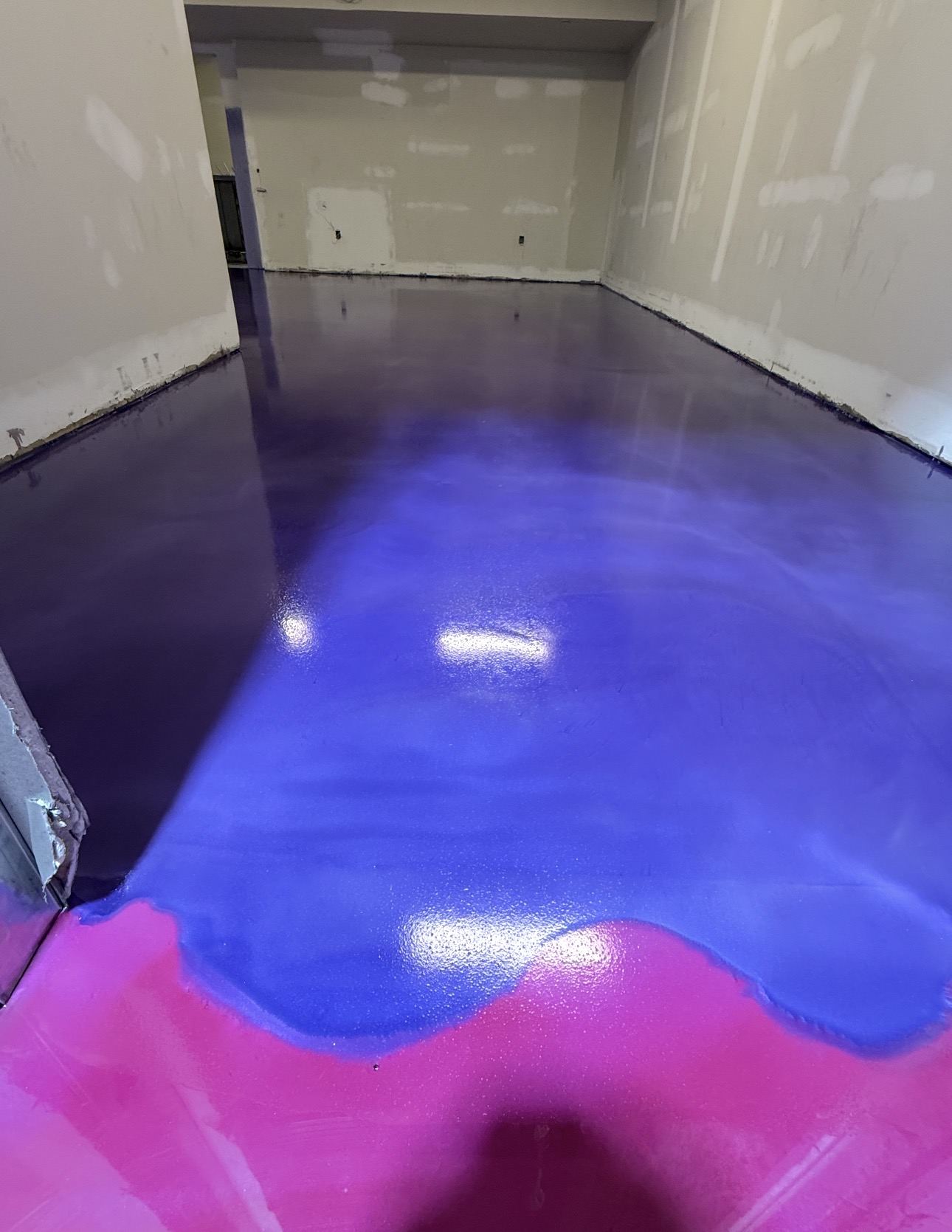
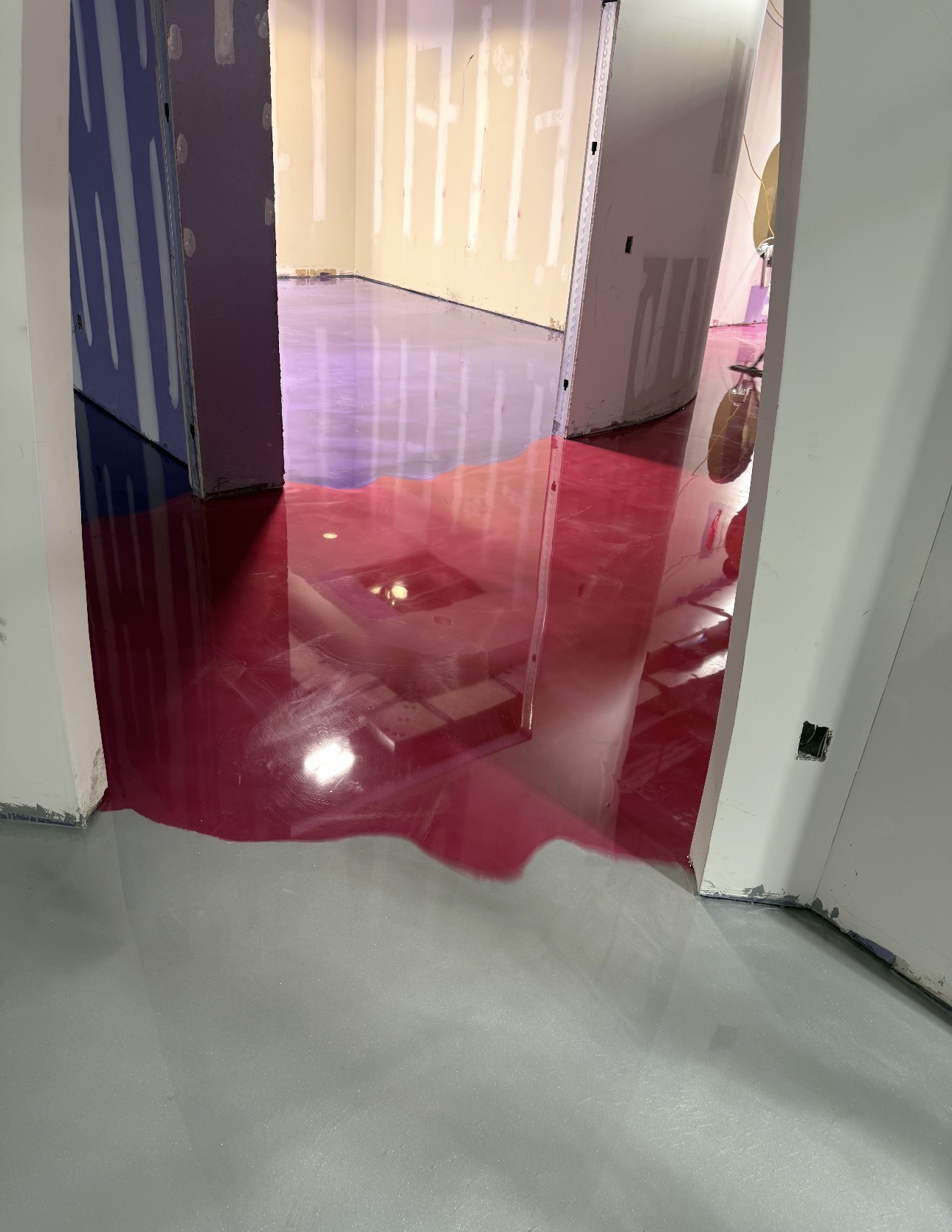
Let's talk about your floor design
Bring us a color, a logo, or just an idea of the look you're after and we'll tell you what's realistic on your slab.